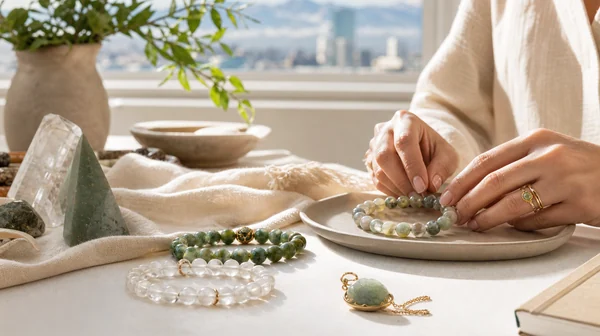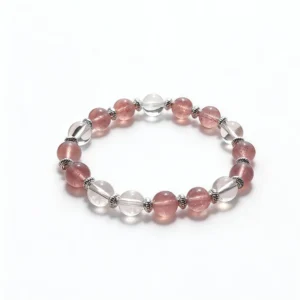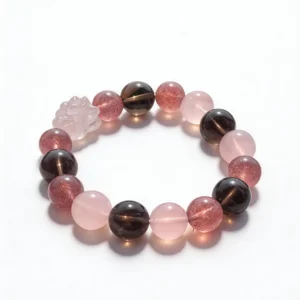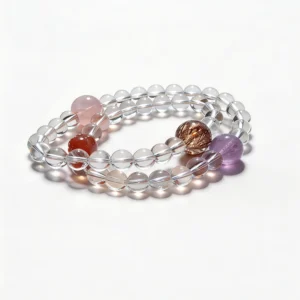


An evening bracelet can be handled as jewelry with a clear place in a nightly setup. The useful questions are physical: which details remain visible in low light, how the bracelet fits beside a watch or cuff, where it rests when it is not worn, and whether the materials need special care. This guide keeps those questions separate from health claims or promises about internal results.
Use the bracelet as a small object to observe, arrange, and store. A repeatable setup makes it easier to compare pieces honestly and notice ordinary wear. The stone does not need an assigned power for the jewelry to have a place in an evening wardrobe or on a bedside tray.
Start With the Evening Setting
Look at the room where the bracelet will be worn or placed. A bedside table may have a lamp, charging cable, book, water glass, and other small objects. A dresser may have a mirror and a jewelry dish. Note the available surface before choosing a bracelet or storage method.
Keep the arrangement easy to describe: left side of the tray, inside the top drawer, or in a separate pouch. A defined location reduces searching and gives you a consistent place to inspect the bracelet before putting it on.
Compare Material Names With Visible Details
Begin with the seller-provided material name and then compare it with the photographs and listed measurements. Look for color range, translucency, inclusions, surface polish, and bead shape. Natural stone pieces can vary from bead to bead, so a single close-up should not be treated as a guarantee of identical color across a strand.
Record what is observable rather than adding an undocumented origin or tradition. If a listing discloses a treatment or enhancement, include that note in your comparison. If it does not, leave the detail unassigned instead of filling the gap with a guess.
Use more than one light source
Check the bracelet in ordinary indoor light and near a window during the day. A glossy surface can look darker under a lamp, while translucent beads may show different inclusions when light comes from the side. Photographing the same piece in two settings helps distinguish material character from camera exposure or a color filter.
Choose a Comfortable Evening Fit
Measure the wrist using the bracelet size guide rather than estimating from a product photo. Leave enough room for normal movement without allowing the strand to slide repeatedly over the hand. The preferred fit may differ between a relaxed evening outfit and a stack worn with a watch.
Test the bracelet while reaching for a book, adjusting a lamp, or using a phone. Check whether a focal bead presses into the wrist or catches on a sleeve. If the piece feels intrusive, move it to the tray instead of forcing a different fit.
When stacking, add one strand at a time. The bracelet stack wear test gives a separate method for checking contact, movement, and sleeve interaction before keeping a combination in regular rotation.
Make the Focal Detail Easy to See
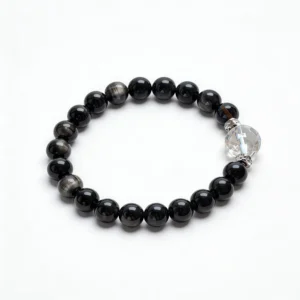
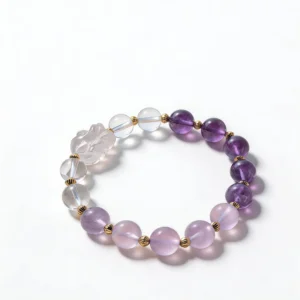
An evening bracelet can be recognized by a color boundary, a faceted bead, a carved outline, a metal spacer, or a change in diameter. Choose one feature that remains distinct without needing a phone flashlight. A clear focal detail also makes product comparisons more useful because you can describe exactly what you noticed.
Place the bracelet on a neutral cloth and view it from the full-strand, close, and on-wrist angles. Compare the listing images with your own photos. This process is for visual documentation, not for proving a material identity that the seller has not documented.
Build a Simple Bedside Tray
A divided tray can separate the bracelet from keys, loose chains, and sharp hardware. Keep the piece flat when possible, and avoid stacking heavy objects on top of elastic or delicate focal components. A shallow dish works when the bracelet is the only item, but a divided organizer is easier to scan when several pieces rotate through the same space.
Leave a little clearance around the bracelet so it can be lifted without dragging across another item. Keep the tray away from spills, direct heat, and unstable edges. The best placement is the one that is visible and easy to reach without creating new contact risks.
Plan a Two-Place Rotation
Some wearers prefer the bracelet on the wrist during an evening routine and on the tray afterward. Handle those as two deliberate locations. Put the piece on only after checking the fit, then return it to the same tray compartment when you are finished.
A rotation record can be as short as a date, the bracelet name, the light used for inspection, and any visible change. Avoid interpreting the record as evidence of a material or medical effect. It is simply a log of handling, appearance, and comfort.
Review Stringing and Hardware
Inspect elastic, clasps, loops, and drilled edges during normal handling. Look for fraying, looseness, sharp points, or a component that has shifted position. Stop wearing a piece that shows a construction problem until the seller or a qualified repair professional provides guidance.
Do not stretch elastic around a bottle, lamp, or display stand. Store the bracelet in its natural circular shape or flat in a suitable compartment. Separate metal findings from surfaces that may scratch easily.
Keep Care Instructions Specific
Follow the care directions supplied for the listed materials. A soft dry cloth may be appropriate for some pieces, while others require a different approach. Do not assume that every stone, finish, cord, or metal component can be exposed to water, chemicals, heat, or abrasive cloths.
When the care information is missing, ask the seller before using a cleaning method. Record the answer with the product details so it is not accidentally transferred to a different bracelet.
Compare Evening Styling Options
Try the bracelet with one solid-color sleeve, a knit texture, and a watch or plain bangle. Notice how bead scale changes the visual weight of the outfit. A small strand may disappear against a patterned cuff, while a larger strand can become the only focal point.
Use the bracelet size guide for fit and the crystal bracelet collection for material and scale comparisons. Check each individual listing for its current dimensions and construction rather than assuming that similar colors have the same specifications.
Prepare a Travel Pouch
For travel, choose a soft pouch with enough room for the bracelet to keep its shape. Store it apart from keys, chargers, and other items with hard edges. A small photo of the packed compartment can serve as a visual inventory when moving between rooms or accommodations.
At the destination, place the pouch in a stable location before opening it. This keeps the bracelet from being left on a sink, near a hot appliance, or under clothing where it may be bent or missed.
Keep Notes Factual
A useful note records the bracelet name, material wording from the listing, bead size, fit, visible details, storage place, and care instructions. Add the date when a photo was taken. These details make later comparisons clearer without turning a personal preference into a universal claim.
If the bracelet no longer suits the setting, change one variable: move it to a different tray, adjust the stack, or choose a lower-profile strand. A small controlled change tells you more than replacing every piece at once.
Choose a Piece You Can Verify
- a specific material name and any disclosed enhancement;
- bead diameter, bracelet size, and focal-component measurements;
- full-strand, close, and on-wrist photographs;
- elastic, clasp, or adjustable-cord construction;
- care, return, and contact information;
- a storage plan that keeps the piece separate and visible.
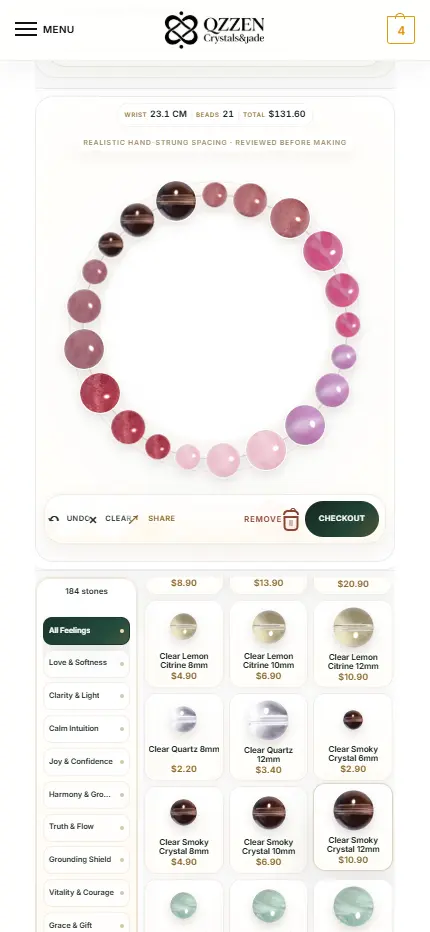
Browse the wider QZZEN shop as a comparison starting point, then verify the current details on each product page. For a custom layout, QZZEN Create lets you compare bead scale, spacing, color boundaries, and a finished circular arrangement before checkout.
Let the Bracelet Remain Jewelry
The simplest evening setup is often the most durable: one bracelet, one visible detail, one comfortable fit, and one defined storage place. Keep the piece as jewelry with natural variation and ordinary care needs. Any personal meaning belongs to the wearer and does not establish a guaranteed outcome.
Create With QZZEN
Build an Evening Bracelet Layout
Use QZZEN Create to compare bead scale, spacing, color boundaries, and a finished circular layout. Keep the design easy to inspect, comfortable on your wrist, and simple to store when the evening is over.