
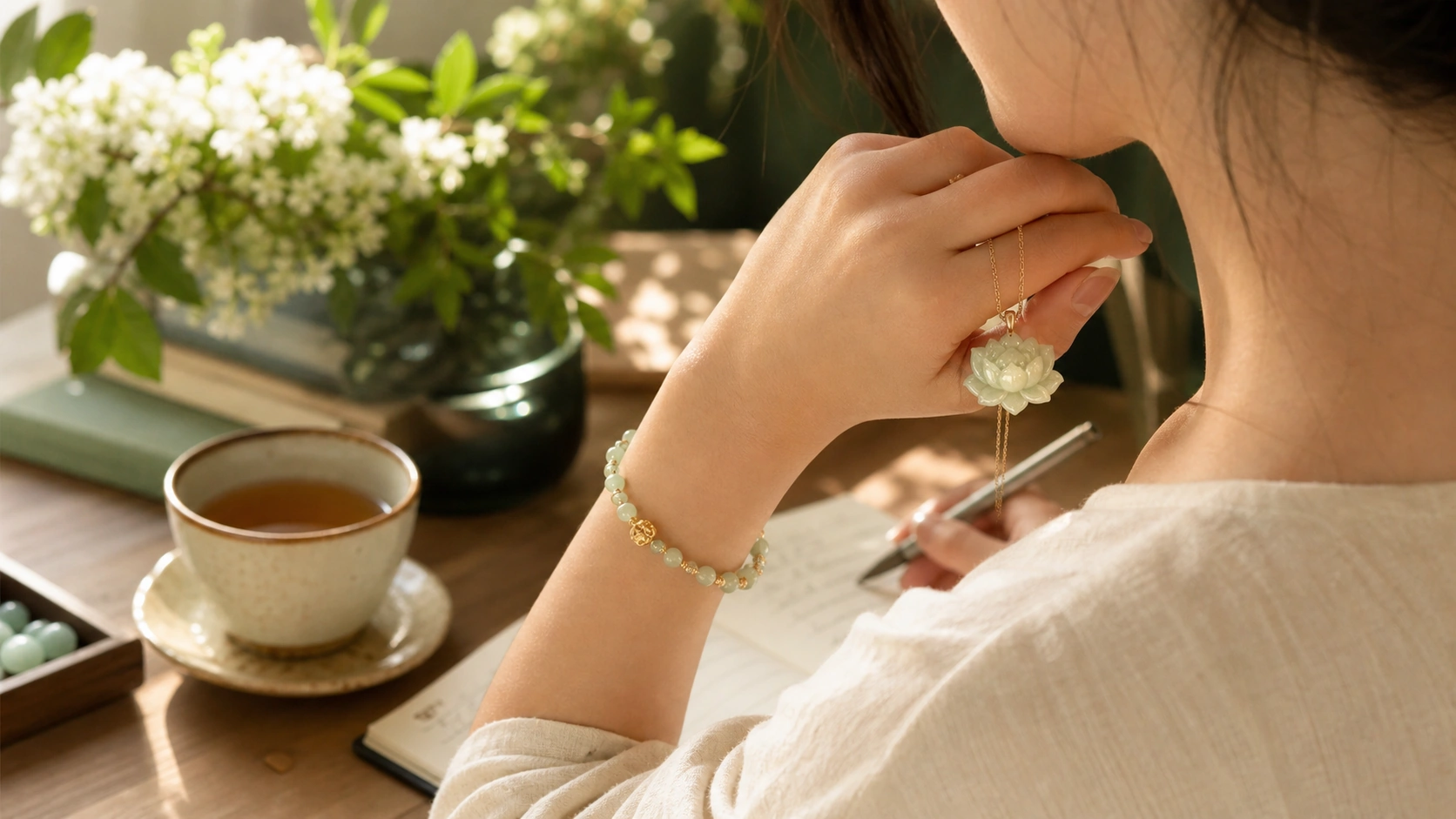
Choose a Hetian jade lotus pendant when the motif, scale, suspension, and care requirements fit how the wearer actually uses jewelry. It can mark a personal idea or occasion without promising an outcome. The practical test is whether the pendant will be comfortable, understandable from the listing, and easy to wear often enough to justify the choice.
Choose it for a clear personal reason
The lotus may represent renewal, composure, growth, remembrance, or simply an appreciation for botanical carving. Keep that meaning personal and specific. Jewelry can carry a reminder or story, but it should not be presented as a treatment or as a way to control health, relationships, finances, or future events.
Decide whether a pendant fits the routine
A pendant leaves the wrists free and can sit inside a collar when a bracelet would meet a desk, cuff, or watch. It may suit someone who already wears necklaces, prefers one central focal point, or wants a piece that can move between casual and dressier clothing. It is a weaker choice when the wearer rarely uses necklaces or dislikes movement at the neckline.
Compare the listing with real use
The Hetian Jade Lotus Seed Pendant page is the source for stated material, dimensions, photographs, included components, price, and availability. Trace the listed dimensions on paper and hold the outline at the intended neckline. Do not estimate size from a close crop or hand image alone.
Understand the jade category
GIA’s jade overview explains that jade refers to jadeite and nephrite. That distinction helps a shopper read material wording carefully. Color, translucency, polish, or a carved lotus cannot independently establish identity, origin, treatment, grade, or value for a specific pendant.
Check comfort and movement
Consider where the pendant lands when sitting, walking, bending, or wearing a coat. A deeper carving can rotate or meet a garment differently from a flat charm. Inspect the back, edges, opening, bail, knot, or connector and confirm that the supplied chain or cord supports the pendant without crowding the carving.
Choose styling after the wearing decision
If the pendant already fits the routine, use the separate Hetian jade lotus pendant styling guide for neckline, color contrast, metal or cord choices, and layering. Keeping the purchase decision and outfit advice in separate steps makes it easier to judge whether the item itself is suitable.
Review item-level evidence
Look for images of both faces, the carved openings, side depth, and suspension point. Read variation notes and ask whether photographs show the exact item or representative inventory. QZZEN’s Authenticity Promise provides the route for precise questions without implying that every pendant includes a laboratory report.
Plan the care commitment
GIA’s jade care guidance recommends warm soapy water and notes that treatments can affect which methods are suitable. A soft cloth, low-impact handling, and separate storage are conservative defaults. The cord, chain, or metal connector may require different care from the carved material.
Use a short decision checklist
- The wearer already uses necklaces or has a specific reason to start.
- The lotus motif has a clear aesthetic or personal role.
- The dimensions and hanging length suit ordinary clothing.
- Both faces, edges, carving, and suspension are adequately shown.
- Material wording and available documentation are understood.
- Cleaning and separate storage fit the wearer’s habits.
Keep transaction flexibility
Read the current Returns policy before ordering. After delivery, compare the pendant with the listing in indirect daylight and inspect its dimensions, carving, suspension, and included components before regular wear.
Bottom line
A Hetian jade lotus pendant is a sensible choice when the wearer wants the motif, already has a realistic way to wear it, accepts the care, and can verify the listing details that matter. Personal meaning can support the decision, but fit, construction, evidence, and repeat use should carry it.