

Begin With What a Product Photo Can Show
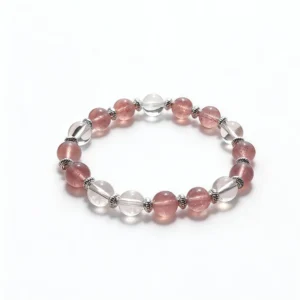
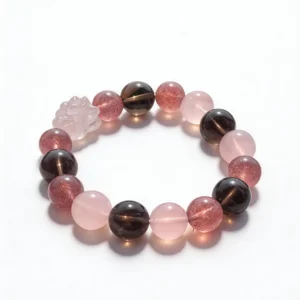
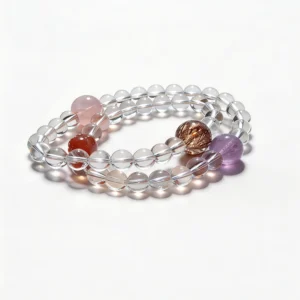
A rune bracelet photo can help you compare visible details such as bead diameter, surface finish, optical effects, engraving placement, component spacing, and overall proportions. It cannot establish every fact about a material or prove how a bracelet will fit your wrist. A useful buying review separates observations from assumptions.
Start with the complete image set rather than the most dramatic photograph. A front view may present the design clearly, while side views, wrist photos, close-ups, and neutral-background images answer different questions. The strongest listing uses several views that describe the same item consistently.
Check Whether the Sheen Moves Across the Beads
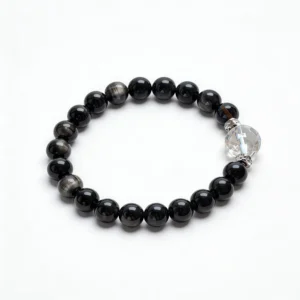
Silver sheen obsidian is valued for a reflective effect that becomes more visible as the viewing angle changes. In photographs, look for the effect appearing in different positions across several beads rather than as an identical bright patch repeated on every surface.
Lighting matters. Direct light can reveal sheen, but it can also create ordinary reflections on polished glass and stone. Compare the highlighted image with a neutral-light view. Photos can document appearance, but visual evidence alone does not verify material identity, geographic origin, or processing history.
Compare Quartz Transparency Without Expecting Perfection
Clear quartz beads may show transparent areas, cloudy zones, veils, internal fractures, mineral inclusions, or small differences between beads. These visible features can help you understand the character of the strand. They do not automatically determine grade or authenticity.
Check whether pale beads retain their edges against the background. If highlights erase the outline or shadows hide the interior, ask for another photograph. A seller should be able to explain whether images show the exact bracelet or a representative example from a group with natural variation.
Inspect Rune Engraving From More Than One Angle
Rune beads introduce practical questions beyond the stone itself. Look at line width, depth, edge definition, fill color, and orientation. A straight-on image can show legibility, while an angled close-up is more useful for distinguishing a recessed mark from a surface print.
- Check whether engraved lines have clean, readable edges.
- Look for chips where a mark meets the edge of a bead.
- Confirm whether colored detail is recessed or applied only to the surface.
- Compare symbol orientation across the complete bracelet.
- Ask for the seller’s symbol reference instead of guessing a translation.
A symbol can carry personal or cultural meaning, but the listing should identify its reference accurately. Do not infer a historical source or promised result from appearance alone.
Use Bead Diameter to Read Visual Scale
Tight crops make bead size difficult to judge. Find the listed diameter and compare it with a measured object, wrist image, or ruler photograph. A 6 mm strand appears more restrained than an 8 mm or 10 mm strand, but the final impression also depends on bead count, focal components, spacers, and wrist circumference.
When a wrist photo is provided, check whether the wrist measurement is disclosed. Without that reference, the photo is useful for styling but not exact fit. The QZZEN size guide explains how to measure the wrist and compare the result with a bracelet’s stated sizing method.
Review Spacing and Strand Construction
Zoom in where adjacent beads meet. A finished strand should allow the beads to sit together without exposing excessive cord or pinching the string between sharp edges. Small gaps may appear when a bracelet is curved around a wrist, so compare flat and worn views when both are available.
For stretch construction, look for a disclosed cord type and clear sizing information. Product photos rarely show the knot well enough to judge it. For clasped or wired construction, inspect crimps, jump rings, end caps, and the clasp connection. Ask for missing construction details before ordering rather than filling the gaps with assumptions.
Look for Consistency Across the Listing
The title, specifications, captions, photographs, and selectable options should describe the same bracelet. If the title says 8 mm but a diagram or option label says something else, ask which measurement applies. The same rule applies to metal components, engraving method, strand type, and included packaging.
- Read the material and component specifications.
- Match each specification to a visible photograph where possible.
- List any fact that the photographs do not answer.
- Ask the seller for clarification before checkout.
- Keep the final description with the order record.
Separate Product Evidence From Brand Language
Descriptive language can explain a design story, but it should not replace measurable facts. Give more weight to bead diameter, bracelet circumference, component materials, processing disclosure, engraving method, photographs, and return terms than to broad statements about how a piece may make someone feel.
Price also needs context. Material naming, bead selection, workmanship, engraving, hardware, packaging, and seller support can all affect a product’s price. A single image cannot tell you whether the price is appropriate; compare the complete specification and service information.
Inspect the Bracelet When It Arrives
Use the listing photographs as a record during arrival inspection. Review the bracelet in neutral light before removing tags or making alterations.
- Confirm the bead size, count, materials, and selected wrist size.
- Compare sheen, color range, engraving, and component placement.
- Check for shipping damage, sharp edges, loose findings, or frayed cord.
- Photograph any material difference or construction problem promptly.
- Follow the stated return process if the item differs from the order.
Use Conservative Care for Mixed Materials
A bracelet may combine volcanic glass, quartz, elastic or wire, engraved fill, metal spacers, and adhesives. Care for the most sensitive component. Wipe the piece with a dry soft cloth and store it separately when the exact limits of every part are not documented.
Avoid impact against hard surfaces because polished beads can chip. Remove the bracelet before activities that pull the strand or expose it to household chemicals. Inspect cord, knots, clasps, and connecting rings periodically, and stop wearing the piece if a component becomes loose or sharp.
Compare the Rune Bracelet With Related Layouts
Review the Silver Sheen Obsidian and Clear Quartz Rune Bracelet for its current specifications, photographs, price, and availability. Then compare it with other bead sequences so you can see whether the rune focal point, contrast, and scale suit the way you plan to wear it.
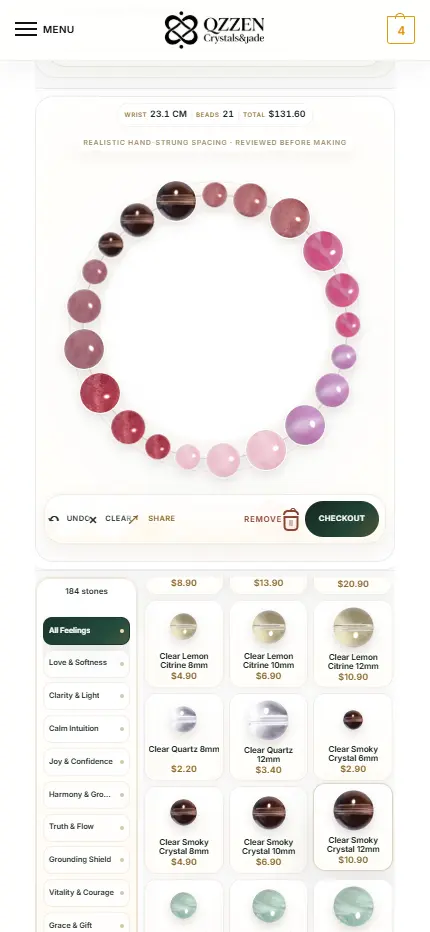
If you want to test a different sequence, QZZEN Create provides a circular preview for comparing bead size, material placement, and the complete arrangement before checkout.
Create With QZZEN
Preview the Rune Bead in a Complete Layout
Compare focal placement, bead sequence, and visual scale in one circular bracelet preview.