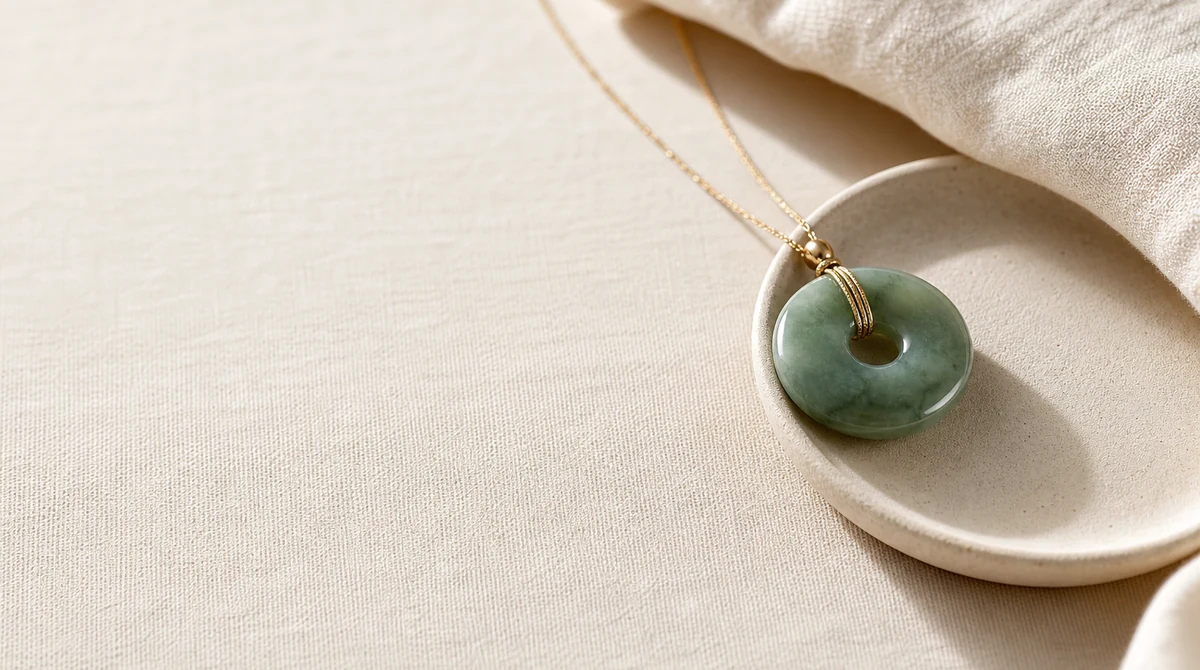
“Xinjiang jade” is a geographic market description, not a complete laboratory identity or quality grade. Shoppers often encounter it alongside Hetian or nephrite terminology. The careful approach is to separate the claimed place association from mineral identity, visible qualities, treatment disclosure, workmanship, and the evidence supplied for the individual item.
Treat geography and mineral identity as different claims
GIA’s jade overview explains that jade refers to jadeite and nephrite. A Xinjiang reference does not by itself prove that an object is nephrite, establish its exact source, or rank its quality. Ask what the seller means by the term and what supports that description.
Understand why the name attracts attention
Historical associations, established carving traditions, pale nephrite preferences, and collector vocabulary can all contribute to demand. Those factors explain interest but should not be converted into a universal claim that every Xinjiang-labeled object is rare, superior, untreated, or more valuable.
Describe the object before the label
Record body color, secondary tones, translucency at thin edges, texture, veining, surface finish, carving, dimensions, and condition. Neutral-light photographs of both faces and edges are more useful than a dramatic backlit image. The overview of jade colors and material categories provides a separate vocabulary for appearance. Compare exact observations instead of relying on “mutton fat,” “old mine,” or similar trade language alone.
Apply quality factors carefully
GIA’s jade quality-factor guide discusses color, transparency, texture, cut, and size. These categories help explain why two objects can look and wear differently. They do not authenticate a stated Xinjiang origin without appropriate item-level evidence.
Ask documentation questions that can be answered
Use QZZEN’s Authenticity Promise to ask whether photographs show the exact item, what material is stated, whether treatments are disclosed, and what documentation accompanies it. Do not assume a general policy means a geographic-origin report or laboratory certificate is included.
Compare price through the whole object
Consider design, carving difficulty, finish, condition, dimensions, hardware, seller terms, and documentation together. A high price does not verify origin, while a low price does not identify material. Compare like formats and similar evidence rather than only matching a regional keyword.
Inspect before altering
Review shipping information before purchase. On arrival, compare the piece with the listing in neutral light and retain packaging while following the returns policy.
Bottom line
Xinjiang wording can provide historical and market context, but it is only one claim. A sound decision still depends on mineral identification, visible characteristics, treatment disclosure, workmanship, documentation, condition, and transaction terms for the specific piece.