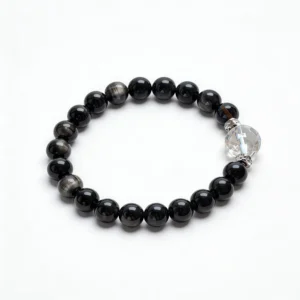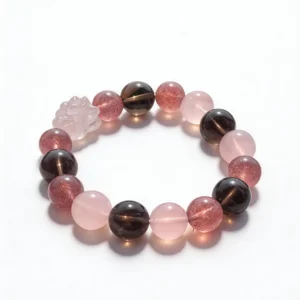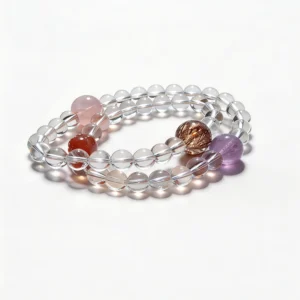

A clear quartz and hematoid quartz bracelet can be a thoughtful gift when the recipient likes visible inclusions, red-to-brown contrast, and a substantial bead profile. Judge the exact piece through photographs, disclosed materials, dimensions, finish, construction, fit, care, and transaction terms rather than assigning guaranteed meaning or rarity to the combination.
Decide whether the visible contrast suits the recipient
Clear areas and warm iron-colored patterns create more visual activity than uniform transparent beads. Look at the jewelry the recipient already wears. Someone who chooses quiet, even color may prefer a simpler strand, while a collector of patterned materials may value individual bead variation.
Treat the product name as a starting point
The GIA gem encyclopedia is useful for comparing established gem-material categories. The term hematoid quartz is commonly used in retail for quartz with red, orange, or brown iron-related inclusions or staining, but a listing should explain what is actually known about the item. Photographs alone cannot establish composition or treatment.
Understand variation within quartz
GIA’s tiger’s-eye quartz exhibit shows how a named quartz variety can be defined by a distinctive visual structure. It is not an identification guide for hematoid quartz; it is a useful reminder to separate a trade name and appearance from item-level verification.
Review the exact listing
Use the 13mm clear quartz and red hematoid quartz bracelet page to check current photographs, dimensions, components, and availability. Ask whether images show the exact strand, how much bead-to-bead variation to expect, and what is known about treatments.
Account for 13mm scale
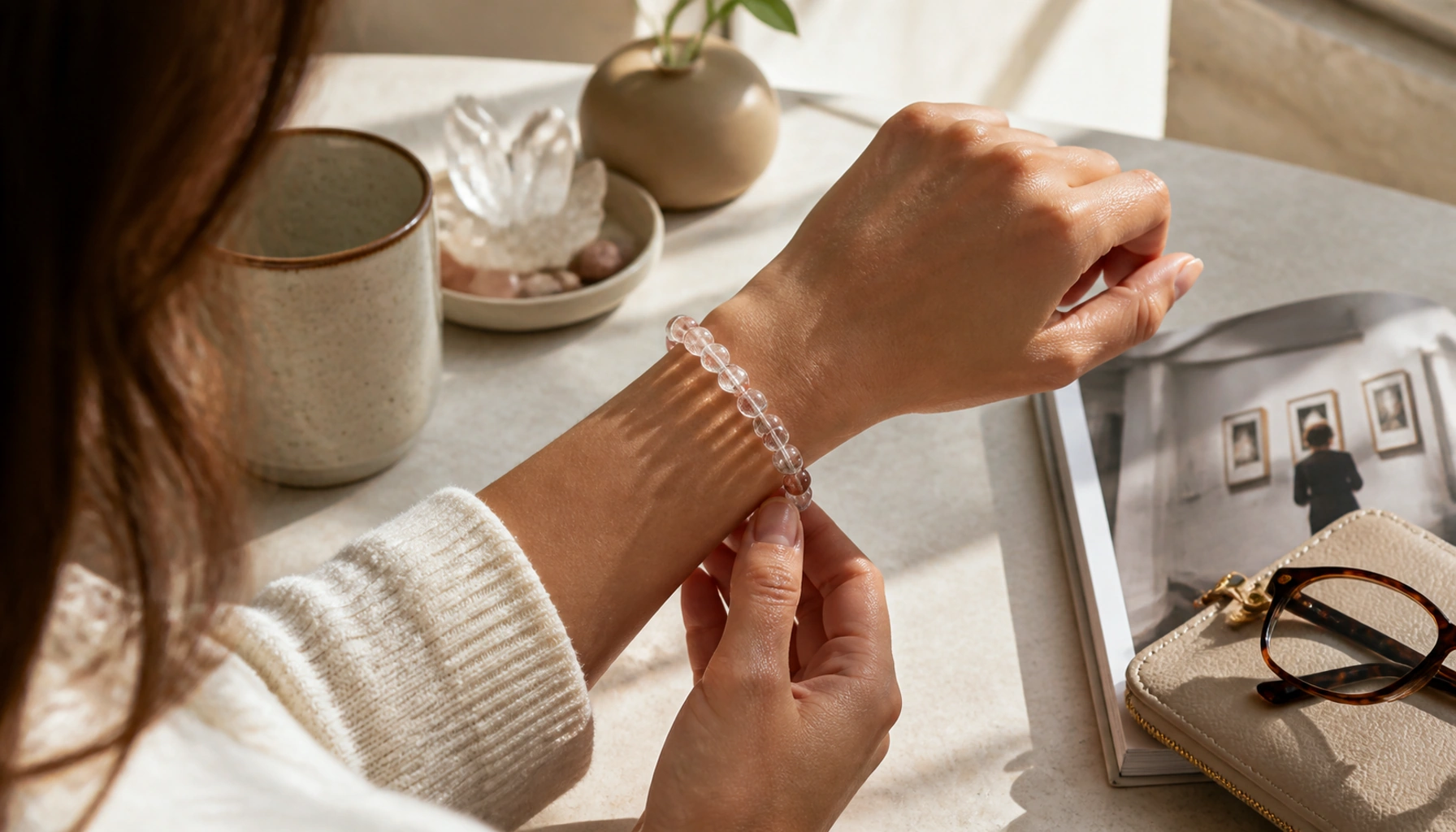
Thirteen-millimeter beads create a prominent wrist profile and reduce the strand’s interior space compared with smaller beads at the same measured length. Use Size Help, compare a bracelet the recipient already owns, and consider desk work, cuffs, watches, and hand movement.
Inspect finish and assembly
Zoom in on polish, surface-reaching fractures, chips, flat spots, drill-hole edges, bead matching, spacers, elastic or cord tension, knots, and hardware. Inclusions can be visually interesting, but they should not be used to excuse avoidable damage or weak construction.
Ask for clear disclosure
Use QZZEN’s Authenticity Promise for item-specific material and documentation questions. Do not assume that price, transparency, red color, or the word natural proves origin, treatment status, grade, scarcity, or future value.
Keep symbolism bounded
A giver may connect the contrast with a personal memory, color preference, or chosen intention. Present that as the giver’s meaning, not as a promise of energy, healing, calm, protection, luck, improved relationships, or financial results.
Use whole-piece care
Remove the bracelet before swimming, exercise, cleaning, or applying lotion and fragrance. Wipe it gently, dry it fully, avoid impact, and store it separately. Follow the most conservative requirement among the beads, stringing material, metal, adhesive, and any other components.
Inspect before changing the gift
When it arrives, compare the strand with the listing for color, pattern, bead diameter, finish, construction, and included components. Read the returns policy before resizing, restringing, or extended wear.
Bottom line
This combination works best for a recipient who enjoys noticeable bead scale and natural-looking internal pattern. Its gift value should come from the actual appearance, credible disclosure, workmanship, comfortable fit, and repeat wear, not from an unsupported outcome claim.