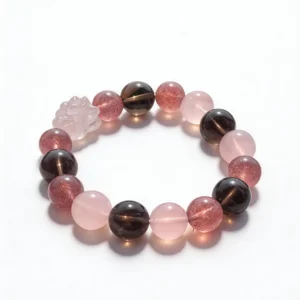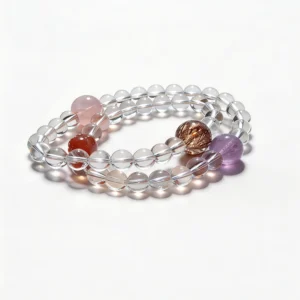


An evening bracelet routine should begin with fit, construction, and a clear removal point. Review the bracelet in ordinary light, wear it only during suitable activities, then take it off before getting into bed. A consistent bedside storage place and a brief condition check help protect cord, hardware, bead surfaces, and nearby items.
Set a Clear Time to Remove the Bracelet
Decide in advance when the bracelet comes off. A practical point may be before showering, applying skin products, changing into fitted clothing, or getting into bed. Removing it at the same stage reduces the chance of leaving it under a pillow, in bedding, on a bathroom counter, or beside a sink.
A bracelet is jewelry, not overnight equipment. Beads, elastic, clasps, charms, and other hard components can catch on fabric or press against the wrist when body position changes. Follow the seller’s product guidance and place the bracelet aside whenever its condition or fit raises a concern.
Review Bead Profile for Evening Activities
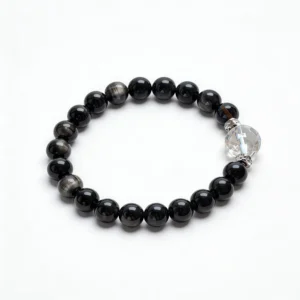
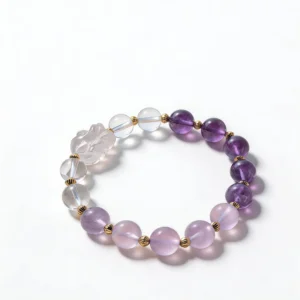
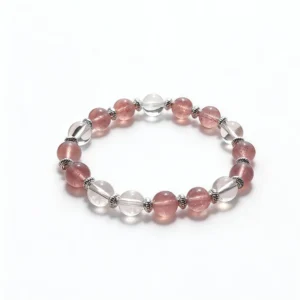
Bead diameter affects how far a bracelet projects from the wrist. Large rounds, carvings, and raised focal pieces may contact a laptop edge, armrest, tabletop, mug, or book more often than a low-profile strand. Record the listed diameter and compare it with jewelry already used comfortably in the same setting.
Charms require extra clearance because they rotate and hang below the strand. Note charm length, ring position, and the surfaces it may strike. A quieter room does not change the mechanical contact between hard components, so inspect placement rather than relying on how the bracelet sounds during a short test.
Check Fit With Sleeves and Cuffs
Evening clothing often introduces loose sleeves, elastic cuffs, robe ties, or knit textures. Put the bracelet on before the sleeve and move the hand through ordinary reading, typing, reaching, and sitting positions. Check whether the fabric pushes the bracelet toward the hand or catches a charm or clasp.
Use an actual wrist measurement instead of estimating from photographs. The QZZEN size guide provides a repeatable starting method. Compare the measurement with the seller’s finished-size definition, since inner circumference and end-to-end length are not interchangeable.
Inspect the Bracelet Before Light Levels Drop
Low room light can hide frayed fibers, a partly open jump ring, small gaps, or residue near a drill opening. Complete the detailed check under ordinary neutral light before wearing the bracelet in a dimmer setting. Turn the entire strand and inspect both the visible and skin-side surfaces.
Do not use darkness, flashlight response, or screen color as an identity test. Camera exposure and directional light can change the apparent color and transparency of a bead. Material conclusions should come from accurate listing disclosure and appropriate professional evaluation when needed.
Keep Skin Products Away From the Bracelet
Lotions, fragrance, oils, hair products, and other cosmetics can collect around cord exits, carvings, spacers, and textured surfaces. Apply products before putting on jewelry and allow them to dry according to their instructions. Remove the bracelet first when reapplying anything near the wrist.
If residue appears, follow the bracelet’s material-specific guidance. A dry, soft cloth is a conservative starting point when no other method is provided. Avoid household cleaners, abrasive pads, prolonged soaking, and unverified chemical methods that may affect stone, coating, adhesive, elastic, or plating.
Avoid Water and Temperature Extremes
Take the bracelet off before bathing, washing dishes, swimming, or using a hot tub. Water exposure can affect cord, elastic, adhesive, coatings, and some metal finishes even when an individual bead material is less sensitive. Sudden temperature changes can also affect assembled components differently.
Keep the piece away from heaters, candles, windows with strong direct sun, and chilled surfaces. Temperature is a storage condition, not a reliable shortcut for identifying a material. Review the complete bracelet and follow the limit of its most sensitive component.
Create a Dedicated Bedside Landing Place
Choose a stable tray, lined box, or soft pouch away from the edge of the nightstand. The location should be dry, easy to reach before bed, and separate from drinks, cosmetics, charging cables, tissues, and loose objects. A defined place reduces accidental drops and misplaced pieces.
Do not place a bracelet directly on a phone, tablet, watch, or other device. Beads and metal parts may scratch nearby surfaces, while cables and magnetic accessories can catch moving hardware. Keep the jewelry area simple enough to use without searching in low light.
Separate Hard and Delicate Components
Store bracelets individually when polished beads, faceted edges, carvings, charms, and metal spacers could rub against one another. Close clasps and lay chains without tight bends. Let stretch bracelets retain their relaxed circular shape rather than hanging them from a hook or pulling them around a container.
Use a clean liner that does not shed fibers into prongs, rings, or textured details. Keep the seller’s care instructions with the order record. The QZZEN crystal bracelet collection can be reviewed for current construction and material details before selecting a piece.
Run a Brief End-of-Day Check
- Remove the bracelet over a soft, clear surface.
- Confirm that all beads and moving components are present.
- Inspect cord exits, knots, crimps, clasps, rings, and charm links.
- Look for residue, sharp edges, new gaps, or visible strand damage.
- Wipe only as directed and allow the piece to remain dry.
- Place it in the assigned storage position without stretching the strand.
If a connection opens or the cord shows damage, leave the bracelet out of use until it can be evaluated. Photograph the area under ordinary light and retain the order details when contacting the seller.
Pack a Night Storage Kit for Travel
A small rigid case or padded pouch can provide a predictable landing place in a hotel or guest room. Keep each bracelet in its own compartment and store the case away from sinks, room-service items, bedding, and the edge of a desk. Add a plain label if several people are packing jewelry together.
Count the pieces when unpacking and again before departure. Keep product records available offline when traveling. A quick inventory is more reliable than placing jewelry in several temporary locations around an unfamiliar room.
Use an Evening-Wear Checklist
- Wrist measurement and seller’s finished-size method
- Bead diameter, charm length, clasp, and strand type
- Sleeve, desk, armrest, watch, and device contact points
- Removal before water, cosmetics, clothing changes, and bed
- Ordinary-light review of cord, hardware, and bead surfaces
- Separate, dry storage on a stable lined surface
- Travel inventory and retained order information
Use the same fields when comparing candidates in the QZZEN shop. A bracelet suited to evening wear should match measurable fit and construction needs before color or symbolism enters the decision.
Create With QZZEN
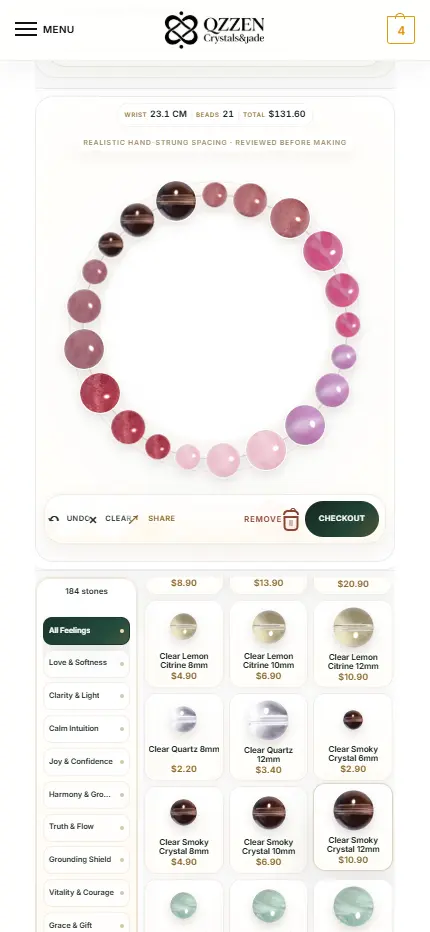
Preview an Evening Bracelet Before Checkout
Use QZZEN Create to review a complete circular layout, bead sizes, color sequence, and wrist measurement. Compare the preview with your sleeve, hardware-clearance, removal, and bedside-storage notes before selecting the final design.