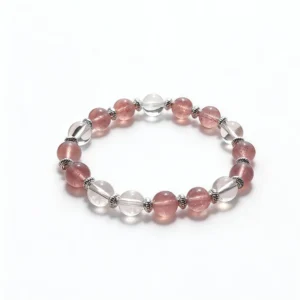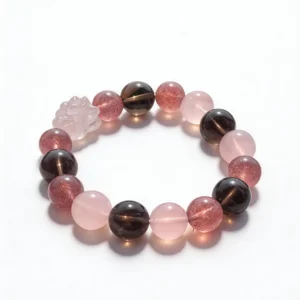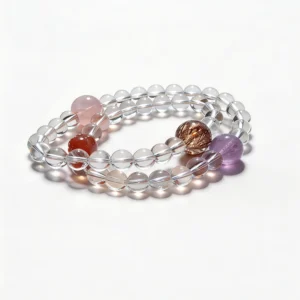


Start With Observable Material Details
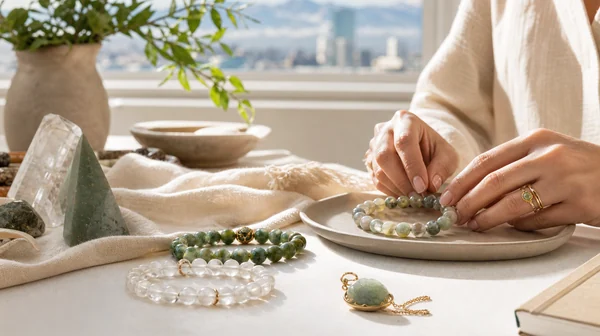
A meaningful bracelet begins with information you can inspect. Look at color variation, translucency, inclusions, surface polish, bead shape, drill holes, and the way the strand is assembled. These details are more useful than broad claims because they help you compare what is shown with what the seller describes.
Natural materials are not required to look irregular in every possible way. Some beads are selected for close visual consistency, while others show obvious bands, clouds, specks, or shifts in color. The useful question is whether the listing explains the material clearly and shows enough detail for you to evaluate the actual piece or a representative example.
Read the Material Name Precisely
Product names can describe a mineral, a rock, a trade name, a color variety, or a manufactured material. Read the specification section before relying on the headline. Terms such as natural, synthetic, reconstructed, dyed, coated, glass, and imitation describe different things and should not be used interchangeably.
A careful listing should separate material identity from appearance. For example, a bead may have a quartz-based material description and a separate note about color enhancement. When wording is unclear, ask the seller what the beads are made from and whether any dye, coating, heat, filling, or other processing has been disclosed.
Inspect Color and Internal Variation
Compare several beads rather than judging one close-up. Natural variation may appear as changes in hue, saturation, opacity, banding, veils, small mineral inclusions, or differences between one side of a bead and the other. These features can support a material description, but no single visual cue proves identity by itself.
Lighting also changes what you see. Window light, warm indoor bulbs, direct flash, editing filters, and screen settings can make the same bracelet look different. Useful listings include images in more than one view and avoid hiding every surface behind heavy contrast or color editing.
Check Bead Shape, Polish, and Drill Holes
Rotate the product images and inspect the edges of each bead. Round beads should have a consistent profile without needing to be identical. Faceted beads should show deliberate facet placement, while carved beads should have readable edges and recessed areas that are not packed with polishing residue.
Drill holes reveal practical workmanship. Look for chips, rough rims, holes that wander sharply off center, or string that rubs against a narrow edge. Minor variation can be normal, but repeated damage around the holes may shorten the useful life of the strand.
Use Weight and Temperature Only as Supporting Clues
Stone and glass often feel cooler than many plastics when first handled, and materials of the same size can differ in weight. These observations may help with an in-person comparison, but they are not stand-alone identification tests. Room temperature, bead size, hollow components, and metal findings can all change the result.
Avoid scratch, flame, chemical, or impact tests on finished jewelry. They can permanently mark a bead, weaken stringing, damage a coating, or create sharp fragments. If exact identification matters, use documentation from a qualified laboratory or an independent gem professional.
Compare Size With a Measured Reference
Close-up photography can make small beads appear much larger than they are. Check the stated bead diameter, bracelet circumference, and any charm dimensions. A ruler photo or a wrist image with the wrist measurement disclosed gives you a better scale reference than a tightly cropped product image.
- Measure the wrist at the position where the bracelet will sit.
- Add the amount of ease you prefer for a closer or looser fit.
- Compare that target with the listing’s inner circumference or size method.
- Check whether large beads or charms reduce the usable inner space.
- Review the seller’s resizing and return terms before ordering.
The QZZEN size guide provides a practical reference for measuring before you choose a finished piece or plan a custom layout.
Review Strand and Clasp Construction
For stretch bracelets, check whether the listing identifies the cord type and whether the knot is secured and positioned away from sharp bead edges. For clasped bracelets, inspect jump rings, crimps, wire guards, end caps, and the clasp connection. Findings should meet cleanly without visible gaps that could release the strand.
- Look for even spacing without pinched cord or crowded components.
- Check that charms face the intended direction in wrist photos.
- Confirm the metal description for clasps, spacers, and decorative parts.
- Ask whether the photographed piece or a comparable piece will be shipped.
- Review repair, resizing, and return information before purchase.
Evaluate Seller Evidence
Good evidence is specific and internally consistent. The title, description, specifications, photos, packaging information, and answers from the seller should describe the same item. Exact dimensions and plain processing disclosures are more useful than vague rarity language or unsupported origin stories.
Origin and material certainty require evidence. A photograph alone usually cannot establish a mine, region, age, or laboratory grade. If a listing makes a precise origin or grading statement, look for the document or testing basis behind it and check whether that document applies to the item being offered.
Choose Details That Carry Personal Meaning
Personal meaning does not need a universal claim. A color may connect to a place, a carved symbol may refer to a family story, or a bead sequence may mark an occasion. Record that context in a gift note or product record so the story remains separate from the material description.
When comparing jade pieces, use the QZZEN jade collection to examine different bead scales, carvings, settings, and color combinations. Compare the disclosed details across several listings instead of assuming that appearance alone establishes material type or origin.
Run an Arrival Inspection
Inspect the bracelet before regular wear. Compare it with the order description in neutral light and keep the packaging until you finish the review.
- Confirm the material wording, size, quantity, and included components.
- Check every bead for shipping damage, sharp edges, or loose parts.
- Inspect the string, knot, clasp, crimps, and connecting rings.
- Photograph any mismatch before removing tags or altering the bracelet.
- Contact the seller within the stated return period if something differs.
Care for the Whole Bracelet
Care instructions must account for every component, not only the main beads. Elastic, plated findings, adhesives, coatings, soft minerals, and porous materials may each have different limits. A dry soft cloth and separate storage are conservative starting points when the exact construction is uncertain.
Remove the bracelet before activities that pull the strand or expose it to household chemicals. Inspect elastic, knots, wire, clasps, and charm connections periodically. Stop wearing the piece if a component loosens or develops a sharp edge.
Compare a Custom Bracelet Layout
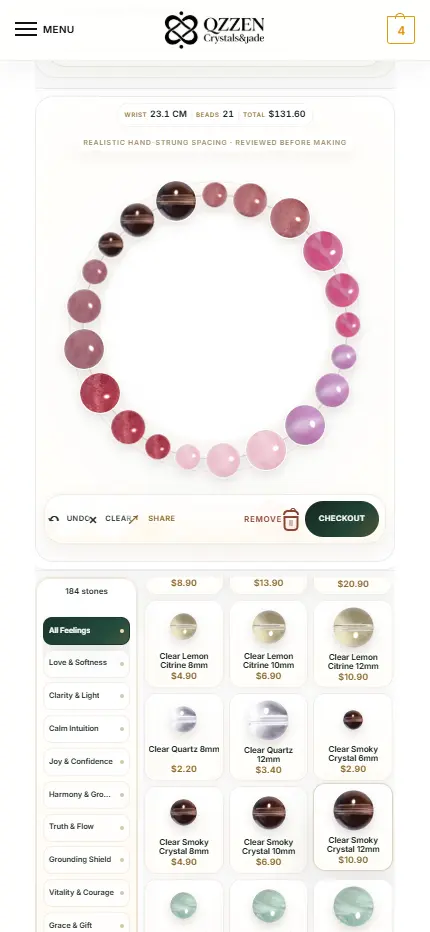
Once you have chosen a material direction, compare bead diameter, sequence, spacers, and total layout before ordering. QZZEN Create lets you preview a circular bracelet arrangement and review how the components work together.
Create With QZZEN
Preview the Materials and Sequence Together
Compare bead size, component order, and the complete circular layout before checkout.