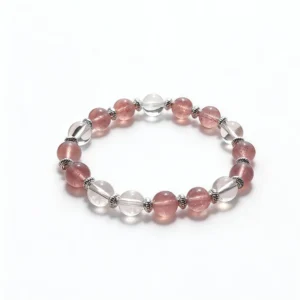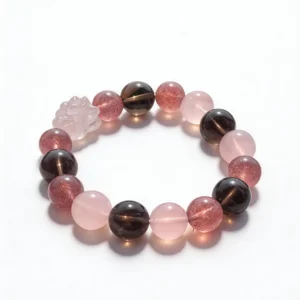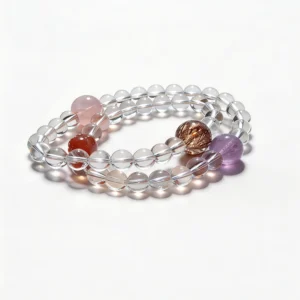


Natural crystal identification for everyday jewelry starts with evidence you can compare: the material name, close photographs, bead dimensions, construction details, and the way a piece fits into your usual wardrobe. No single visual clue proves what a bead is. A better approach combines what the seller states with what the listing and the delivered piece visibly show.
Define How the Jewelry Will Be Worn
Begin with the setting rather than a stone name. A bracelet worn beside a watch needs enough room to move without repeatedly striking the watch case. A strand worn under a fitted cuff benefits from smaller beads and a low-profile closure. A piece reserved for weekends can use a larger bead scale or a prominent charm without competing with a keyboard or sleeve.
Write down the practical requirements before comparing listings: bracelet or pendant, preferred color range, bead diameter, wrist measurement, closure type, and any nearby jewelry. This short list makes it easier to judge the actual piece instead of relying on broad lifestyle language.
Read the Material Name Precisely
A useful listing names the material as specifically as the seller can support. Quartz, amethyst, agate, glass, resin, and composite material are different descriptions. Terms such as natural, processed, dyed, reconstructed, or synthetic should not be regarded as interchangeable. If the page uses a trade name, look for a plain material description beside it.
Natural origin does not mean unprocessed, flawless, rare, or independently verified. Likewise, visible variation is not proof of origin. When a listing does not state testing or documentation, regard the material name as seller-provided information and compare it with the photographs and disclosure on the same page.
Compare Color and Internal Variation
Review several beads rather than selecting one dramatic close-up. Look for differences in hue, translucency, clouding, banding, mineral traces, and the placement of inclusions. Some materials can be visually uniform, while others commonly vary across a strand. Repeated patterns may also come from careful bead sorting, so uniformity alone does not identify an imitation.
Screen settings and studio lighting can shift color. Compare images taken against more than one background when available, and note whether the listing explains that individual pieces may differ. Ordinary-light photographs are especially useful because they show how the jewelry may look beside clothing, a watch, or other accessories.
Use Size as a Concrete Comparison
Bead diameter changes both the appearance and physical footprint of jewelry. A 6 mm strand reads differently from a 10 mm strand even when the color is similar. Larger beads project farther from the wrist, occupy more space beside a watch, and can catch a narrow sleeve. Product images without a ruler, wrist view, or stated measurement make scale difficult to judge.
For pendants, compare the pendant dimensions and chain length separately. For bracelets, review bead diameter, inner circumference, and any sizing method the seller provides. The QZZEN size guide explains how to measure the wrist before selecting a finished size.
Measure Wrist Fit Before Styling a Stack
Use a flexible tape around the wrist at the point where the bracelet will sit. Keep the tape close to the skin without pulling it tight, then record the measurement. Compare that number with the seller’s finished-size guidance instead of assuming that a generic small, medium, or large label will fit.
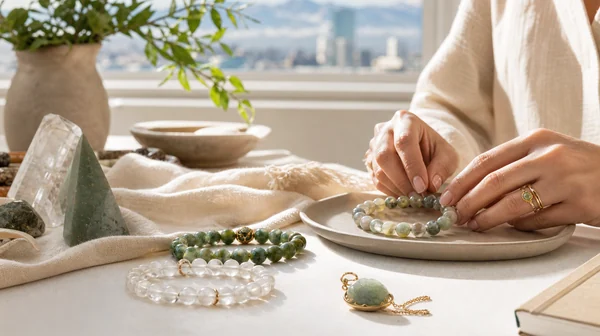
When pairing a bracelet with a watch, decide which item should sit closer to the hand and leave enough space for both. Mixed bead sizes can add visual separation, while identical diameters create a more uniform line. Limit the first comparison to two or three pieces so clasps, charms, and bead edges can be inspected without visual clutter.
Inspect Cord, Clasps, and Metal Parts
Construction determines how a piece behaves during repeated wear. For stretch bracelets, look for even spacing, a cord that is not visibly frayed, and a knot or finishing method that does not create a sharp lump. For clasped strands, inspect the clasp style, jump rings, crimp covers, and the connection between the strand and hardware.
Metal color is not a complete material description. A listing should distinguish plated, filled, sterling silver, stainless steel, or unspecified alloy when that information is available. If metal sensitivity matters, request the material details before purchase rather than inferring composition from appearance.
Check Drill Holes, Polish, and Edges
Enlarge photographs around drill openings and adjoining beads. Small differences in hole placement can occur, but large chips, rough rims, or exposed cord may affect appearance and wear. A polished surface should be reviewed across several beads because reflections can hide shallow scratches or uneven areas.
Carved elements and charms deserve the same review. Check the edge shape, attachment point, orientation, and how the element sits against neighboring beads. These visible construction details are more useful for a buying decision than claims based on sound, initial temperature, or hand-feel alone.
Review Seller Evidence and Listing Consistency
Compare the title, short description, full description, specifications, and photographs. The stone name, bead size, color, hardware, and included components should agree across those sections. If a listing image shows multiple variants, confirm which one the selected option represents.
Look for direct statements about treatment, natural variation, dimensions, and what is included. Shipping and return terms can change, so review the current policy pages at checkout instead of relying on an undated article. A clear listing separates observable facts from personal symbolism and gives the shopper enough detail to compare alternatives.
Use an Arrival Inspection Sequence
- Compare the delivered color and pattern with the listing while allowing for stated natural variation.
- Measure the bead diameter and bracelet fit against the published dimensions.
- Inspect drill holes, cord, knots, clasps, jump rings, and charm attachments under good light.
- Place the piece beside the watch, sleeve, or necklace it will accompany.
- Keep the listing, order record, and packaging until the inspection is complete.
Photograph any material difference or construction issue before extended wear. Clear images of the whole piece and the specific detail make a support request easier to evaluate.
Store and Clean the Whole Piece Carefully
Care should follow the most sensitive component in the jewelry, including stone, coating, cord, adhesive, plating, and elastic. A method suitable for one mineral may not suit the assembled piece. Use a soft dry cloth for routine surface dust, avoid impact, and keep separate pieces from rubbing together in storage.
Remove jewelry before activities that place repeated strain on the cord or hardware. Keep product-specific instructions with the order record, especially for mixed-material designs. When guidance is unclear, ask the seller about the exact construction before using water or a cleaning product.
Use One Checklist for Every Listing
- Specific material name and any treatment disclosure
- Close photographs showing more than one bead
- Bead, pendant, chain, and finished-size measurements
- Clear cord, clasp, hardware, and charm descriptions
- Visible variation explained without certainty claims
- Current product and policy information checked directly
- Care instructions suited to the complete piece
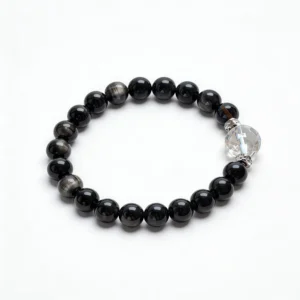
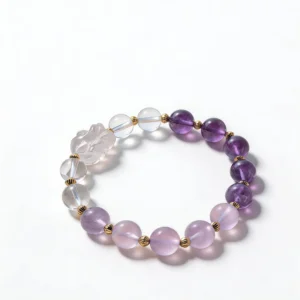
Apply the same questions to every candidate in the crystal bracelet collection or across the wider QZZEN shop. A consistent checklist keeps comparisons grounded in details that can be seen, measured, or documented.
Create With QZZEN
Preview an Everyday Bracelet Layout
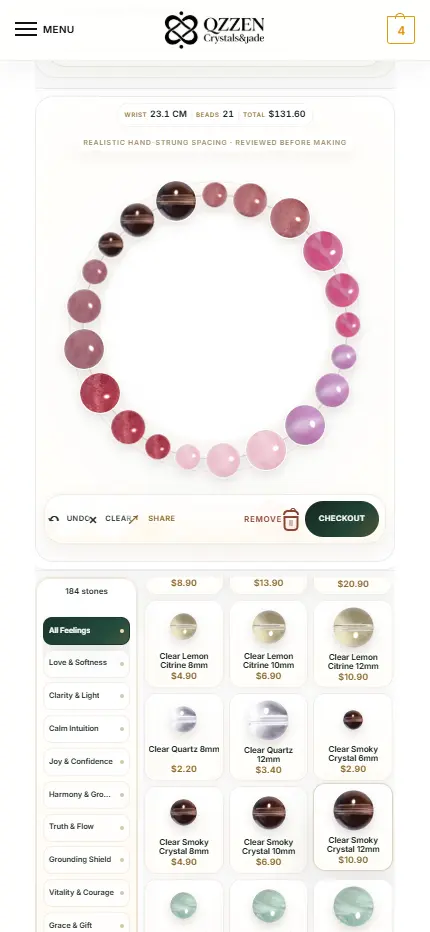
Use QZZEN Create to compare bead scale, color sequence, and a complete circular layout before ordering. Review how the arrangement may sit beside a watch or work with other jewelry, then return to the same material, size, and construction checklist.