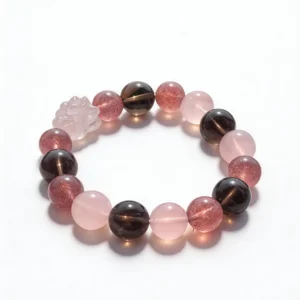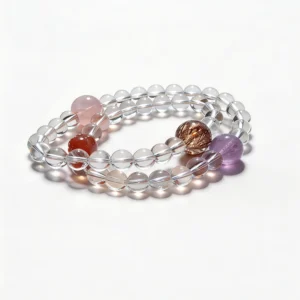


An everyday bracelet stack is easier to repeat when it works like a small wardrobe capsule. Instead of combining every strand at once, record what you own, assign each piece a visual role, and save a few combinations for specific sleeves, watches, and settings. Material wording, measurements, construction, photographs, and separate storage keep the system practical.
Make an Inventory Card for Every Bracelet
Start with one card or spreadsheet row per bracelet. Record the seller’s exact material wording, bead diameter, finished size, strand type, clasp or elastic construction, metal description, charms, spacers, and selected variant. Add the order date and link so the original listing can be reviewed later.
Photograph the full strand in indirect ordinary light, followed by close views of drill openings, knots, crimps, clasps, rings, and decorative hardware. This gives every piece a consistent baseline before it becomes part of several combinations.
Build Three Small Capsule Groups
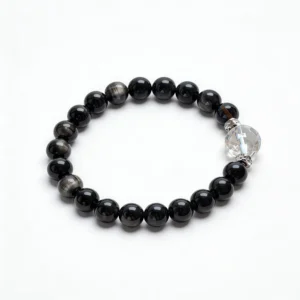
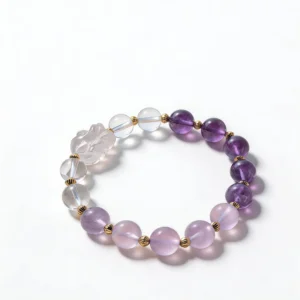
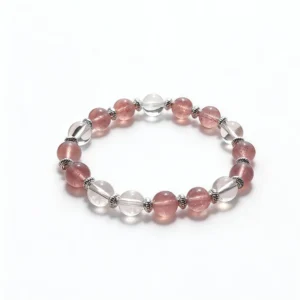
Divide the inventory into three useful groups rather than one large pile. A neutral group might use clear, gray, black, or low-contrast pieces. A color group can organize related hues. A detail group can contain carvings, prominent hardware, or other visually active strands.
These groups are starting points, not fixed rules. A bracelet may appear in more than one saved combination, but the card should identify its usual role. Limiting the first capsule to three or four bracelets makes differences in scale, color, and movement easier to observe.
Choose a Base and One Accent
Select a base bracelet that can appear in several outfits. Its bead size, color, and hardware set the reference for the rest of the capsule. Then choose one accent through a distinct hue, lighter or darker value, different transparency, carving, or restrained metal detail.
Add another strand only when it supports the base and accent without hiding them. Two strong charms or several highly reflective spacer patterns can compete in a small wrist area. Save a simpler version of the combination for days when sleeves, a watch, or frequent hand movement occupy more space.
Match Color to Real Wardrobe Pieces
Compare bracelets beside the garments and accessories they will accompany. Review the actual sleeve fabric, watch band, ring metal, bag hardware, and dominant clothing colors under the same ordinary light. Product photographs on different screens are not a dependable shared color reference.
Separate color into hue, lightness, and transparency. Two green bracelets may look unrelated if one is pale and translucent while the other is dark and opaque. A repeated metal color or neutral bead can connect pieces that otherwise have different material patterns.
Plan for Sleeves, Cuffs, and Watches
Measure the usable wrist area between the hand joint and the point where a sleeve or watch usually sits. Compare that space with the combined width of the planned strands. The QZZEN size guide provides a consistent starting method for recording wrist measurement.
Try the combination with fitted cuffs, knit sleeves, jacket fasteners, and the watch worn in its normal position. Note which order keeps beads away from the watch crown and prevents a charm from entering a cuff. Remove a strand when the available area is too small for repeated movement.
Verify Each Listing Before Adding a Piece
A capsule is still a collection of individual products. Review exact material and processing language, bead dimensions, construction, metal description, and the selected option for every candidate. Natural origin does not by itself establish that a material is unprocessed, rare, flawless, or independently verified.
Look for full-strand photographs as well as close details. Normal variation may appear across color, transparency, pattern, and visible internal features, but photographs alone cannot establish identity. Compare current specifications in the QZZEN crystal bracelet collection and ask about material details that are missing.
Photograph Complete Outfit Combinations
Create one reference photograph for each successful capsule. Include the bracelet order from hand to arm, the relevant sleeve, and the watch or rings normally worn with it. Add a side view so bead height, overlap, and moving hardware remain visible.
Name the image by setting or garment, such as white-shirt-two-strand or weekend-knit-no-watch. A clear file name is more useful than trying to reconstruct a combination from memory. Update the photograph when a bracelet, garment, or order changes.
Rotate Wear and Inspect Connections
Rotation gives each combination a defined place in the capsule and creates regular inspection points. Before wearing a saved group, check elastic for flattening or fraying, cord exits for movement, clasps for complete closure, jump rings for gaps, and charms or spacers for loose connections.
After removal, look for residue, surface changes, and repeated contact between neighboring pieces. Stop using a bracelet when cord or hardware damage is visible. Record the date and affected area on its inventory card rather than returning it to the next combination.
Store Capsules Without Leaving Strands in Contact
A saved capsule does not need to remain physically stacked in a box. Place each bracelet in a separate compartment or soft pouch, then use labels or a storage map to keep the combination together. This limits continuous rubbing between polished beads, carvings, metal parts, and charms.
Keep product-specific instructions with each inventory card. Cleaning guidance should follow the most sensitive part of the assembled bracelet, including elastic, cord, adhesive, coating, plating, metal, and bead material. Avoid soaking, abrasive pads, household mixtures, and unverified chemical methods.
Run an Arrival-to-Capsule Check
- Confirm the order, selected variant, and seller’s material wording.
- Measure bead diameter and bracelet size using the stated method.
- Photograph the full strand and construction details in ordinary light.
- Inspect beads, drill openings, cord, knots, clasps, rings, and charms.
- Compare the piece with its intended base, accent, sleeve, and watch.
- Save the approved combination photograph and assign separate storage.
Keep packaging and order information until the comparison is complete. If the received piece differs from the selected variant or listing, document the difference and use the seller’s stated support process.
Use a Capsule Stack Worksheet
- Inventory card, listing link, order date, and selected variant
- Exact material, processing, bead size, strand, and hardware wording
- Base, accent, and optional supporting role
- Garment, sleeve, watch, ring, and bag-hardware references
- Combination order from hand to arm and usable wrist area
- Ordinary-light full-strand, side-view, and construction photographs
- Separate storage location and dated condition notes
Apply the worksheet to existing pieces before shopping for another strand in the QZZEN shop. A recorded gap, such as a smaller neutral base or a clasp-free accent, provides a clearer purchase brief than adding a bracelet solely because it looks different online.
Create With QZZEN
Preview a Bracelet for Your Wardrobe Capsule
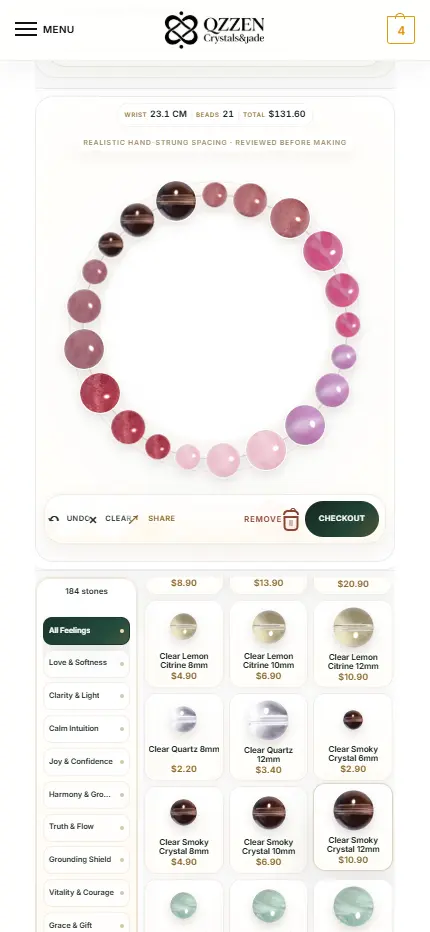
Use QZZEN Create to review a complete circular layout, bead scale, color sequence, and wrist measurement. Compare the preview with your inventory cards, saved outfits, watch clearance, and capsule worksheet before choosing the final design.