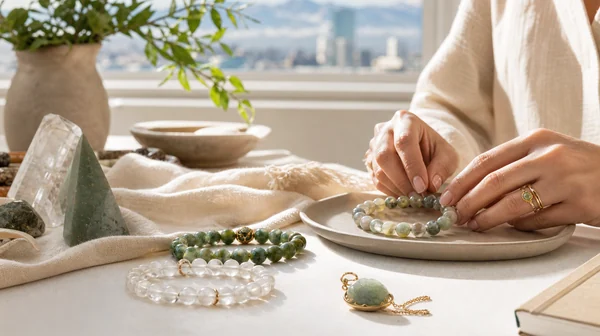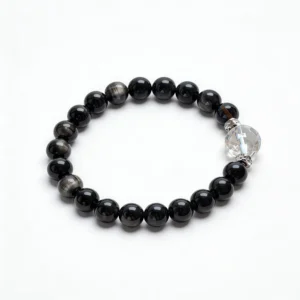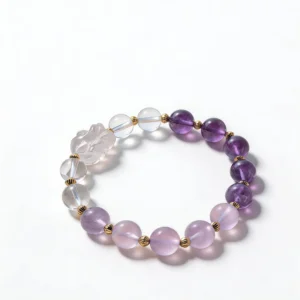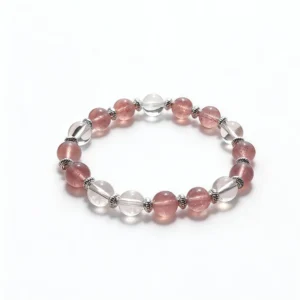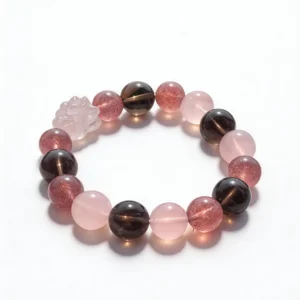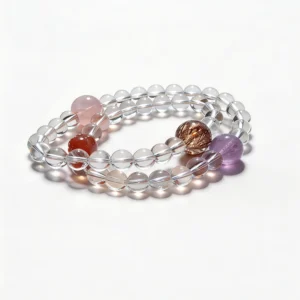

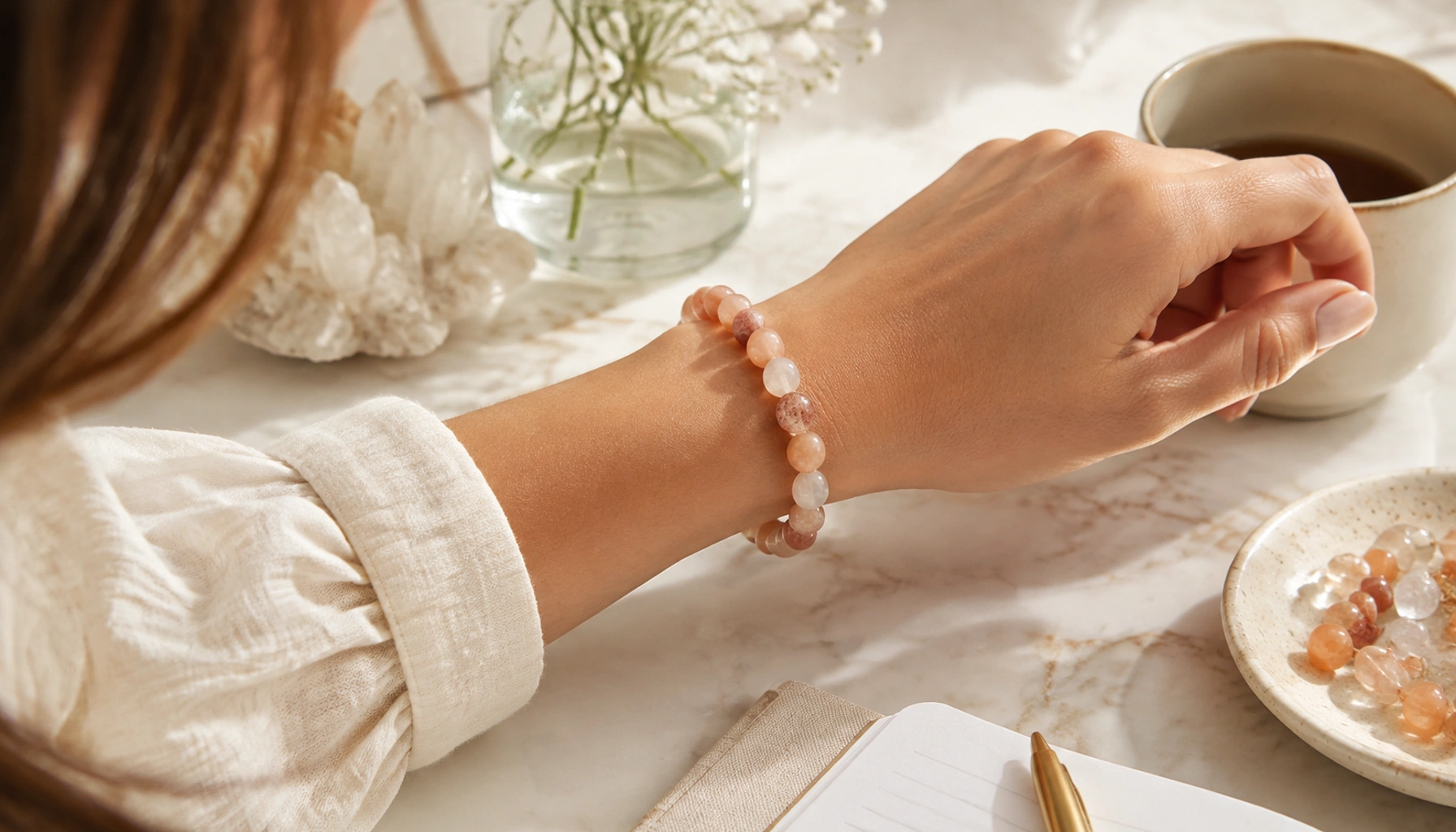
A quartz and moonstone bracelet is worth buying when the wearer will use it, the bead scale feels comfortable, the listing answers material and construction questions, and the transaction terms fit the remaining uncertainty. It is not worth more because of an unverified promise about healing, luck, protection, energy, rarity, or future value.
Define worth before comparing details
Decide what the purchase needs to accomplish. It may add a warm color mix to everyday outfits, provide one substantial bracelet instead of a stack, mark a personal occasion, or serve as a self-gift. A clear use case gives price and product details a practical context.
Estimate likely wear
List three ordinary settings where the bracelet would be worn and two where it would be removed. Consider work surfaces, sleeves, exercise, sleep, water, and household chemicals. A visually appealing piece offers poor value if its size or care requirements keep it in storage.
Test the 10mm decision
The linked 10mm strawberry quartz and orange moonstone bracelet is one current example. Ten-millimeter beads are clearly visible but smaller than a 12mm or 13mm profile. Compare the diameter with jewelry already worn and use Size Help before choosing a wrist option.
Value the evidence you can inspect
- The title and description use consistent material names.
- Photographs show the full bracelet and useful close detail.
- Bead diameter and wrist options are stated clearly.
- Construction, spacers, and closure are visible or described.
- Variation, care, shipping, and returns are easy to find.
Information completeness reduces avoidable uncertainty. It does not convert a seller’s statement into independent laboratory verification.
Understand the moonstone reference
GIA’s moonstone overview explains the feldspar material and its characteristic adularescence. Use that information to understand the category and vocabulary. Whether a specific bead is moonstone, how it was treated, and where it originated still depend on item-level evidence.
Separate material mix from outcome claims
Strawberry quartz, quartz, moonstone, and orange moonstone names may describe the listing’s intended material mix and color story. They do not establish that the bracelet changes mood, relationships, sleep, health, or probability. Personal symbolism can add subjective value without being presented as a guaranteed result.
Check workmanship that affects repeat use
Inspect drill-hole edges, polish, spacing, cord or elastic, and the way beads meet each other when the bracelet bends. Look for obvious chips or rough areas and ask how the bracelet is finished when images do not show the construction. Repeat wear depends more on secure assembly and comfort than on a long symbolic description.
Compare with a custom route
If the ready-made bracelet is close but the color mix, bead scale, or wrist size is wrong, compare it with QZZEN Create. Use the builder’s current total and checkout information for that configuration. A custom option is useful only when the extra choice solves a real fit or style issue.
Price is one part of value
Compare the current price with the stated materials, scale, construction, photographs, support route, and return terms. Avoid generic market-price claims because treatment, documentation, size, workmanship, seller services, and exact inventory can differ. The relevant comparison is between verifiable details, not similar-looking thumbnails alone.
Know what support can verify
Use QZZEN’s Authenticity Promise to ask item-specific questions about material descriptions and available documentation. A missing fact should remain unknown until answered. Do not infer certification, geographic origin, or untreated status.
Include care effort in the decision
GIA’s moonstone care guidance recommends warm soapy water and cautions against high heat and harsh cleaning methods. If the wearer prefers jewelry that can stay on through every activity, a bracelet that needs routine removal may not meet that preference.
Limit transaction risk
Read the current Returns policy before ordering. Inspect the delivered bracelet before regular wear and compare it with the listing while packaging and records are still available. Return flexibility matters most when scale, fit, or exact-item variation is uncertain.
A simple worth-it test
- Would it be worn in at least three normal settings?
- Is 10mm comfortable for the intended wrist and routine?
- Are the important product facts stated or answerable?
- Does the visible workmanship support repeated use?
- Are care and return requirements acceptable?
If several answers are no or unknown, pause rather than letting symbolic language fill the gaps.
Bottom line
A quartz and moonstone bracelet is worth it when its likely use, fit, visible construction, supported material statements, care effort, and transaction protections justify the purchase for that wearer. Treat meaning as personal context and make the decision from evidence that can be checked.