

A useful crystal decor plan starts with the object and the room, not a promised effect. Check the piece’s dimensions, weight, base, surface condition, and care needs, then choose a location where it is stable, visible, and easy to maintain.
Measure the Display Area First
Record the shelf, table, or cabinet width and depth before choosing a piece. Leave space around irregular edges and allow room to lift the object without striking a wall, lamp, or neighboring item. A photograph with a ruler gives more purchasing context than a tightly cropped image.
Scale should match the furniture. A small object can disappear on a wide console but work well in a shallow tray or grouped display. A larger specimen needs enough clear surface area that it does not crowd books, frames, or frequently handled objects.
Check Weight and Stability
Ask for the actual weight and the dimensions of the base. An uneven cluster, tall point, or rounded form may need a fitted stand or museum putty approved for the furniture finish. Do not place a heavy object on a narrow shelf without checking the shelf rating and wall attachment.
Keep sharp points and unstable pieces away from table edges, walkways, and areas reached by children or pets. A closed display cabinet may be the better choice for fragile, top-heavy, or easily chipped material.
Use Light to Show Visible Detail
Side light can reveal translucency, zoning, inclusions, surface texture, and polished faces. Before ordering, compare photographs in ordinary daylight and indoor light. Strong filters or a single backlit view can make color and transparency difficult to judge.
For display, test a location at different times of day. Avoid assuming that every colored material tolerates extended direct sun. When light sensitivity is unknown, use indirect daylight or a nearby lamp and ask the seller for material-specific guidance.
Protect the Furniture Surface
Inspect the underside for rough edges, exposed matrix, metal hardware, or adhesive residue. A stable felt pad, tray, or fitted base can reduce scratching, but it should not make the object wobble. Check pads periodically because dust trapped underneath can mark a polished surface.
Keep stone objects away from wet countertops unless both the material and its finish are suitable for that setting. Condensation, cleaners, and bathroom products can affect the object, its base, or the furniture beneath it.
Compare Material Disclosure
A useful listing identifies the material in specific terms and states any known processing, repairs, coatings, composite parts, or added color. It should also provide dimensions, weight, photographs of the actual piece or representative variation, and a clear return policy.
Price, color, a ringing sound, or a generic certificate does not independently establish identity, origin, rarity, or quality. Ask what a document covers and who issued it. Leave unsupported fields unassigned rather than repeating a seller’s broad claim as fact.
Build a Simple Display Group
Choose one organizing feature such as color, height, surface finish, or shape. Varying heights can help each object remain visible, while repeated colors can connect pieces that differ in form. Leave enough empty space that the arrangement can be cleaned without dismantling the entire shelf.
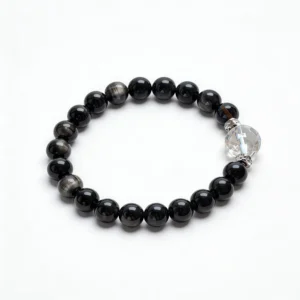
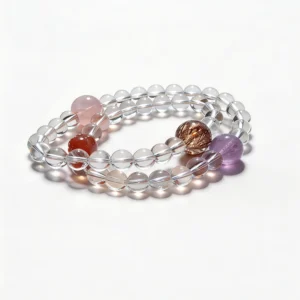
Jewelry can be displayed separately on a bracelet stand or in a shallow lined tray. Keep elastic strands away from pointed clusters and rough specimen edges that may catch the cord. Return wearable pieces to protected storage when they are not part of the display.
Clean With Material-Specific Guidance
Start with a soft dry brush or cloth unless the seller recommends another method. Water, salt, steam, heat, chemicals, and ultrasonic equipment are not universal cleaning methods. They may affect a stone, coating, repaired area, metal stand, adhesive, or furniture finish.
Photograph the piece when it arrives and keep the seller’s care instructions. A simple record makes it easier to notice a loose base, new chip, surface change, or accumulating residue during later checks.
Use a Room-by-Room Checklist
- Entry: keep the object clear of bags, keys, and door movement.
- Living room: check table traffic, lamp heat, and direct light.
- Bedroom: use a stable tray and keep the path around the bed clear.
- Workspace: leave room for cables, papers, and ordinary cleaning.
- Bathroom or kitchen: confirm moisture and cleaner compatibility first.
Buy From Documented Details
Before checkout, compare the exact object, measurements, weight, base, condition, disclosed processing, care directions, protective packaging, and return terms. Contact the seller when any detail needed for a stable placement is missing.
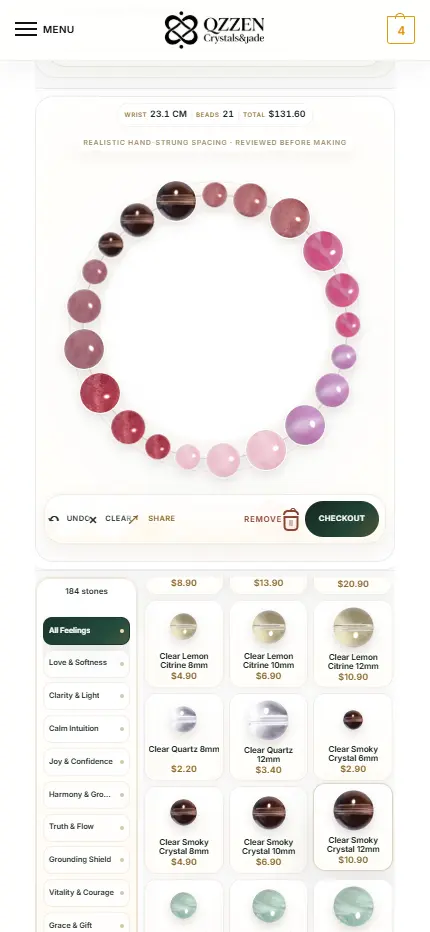
For wearable natural-stone pieces, browse the QZZEN crystal bracelet collection or review the bracelet size guide. For a custom bracelet arrangement, QZZEN Create lets you compare bead scale and spacing before checkout.
Create With QZZEN
Turn a Color Study Into a Bracelet Layout
Compare stone colors, bead scale, spacing, and a finished circular layout before you order.