

Choosing crystal decor is primarily a design decision. Start with the room’s colors, available surface area, viewing distance, and existing materials, then compare an object’s actual dimensions and photographs. A piece should make sense in the composition before any personal symbolism is considered.
Choose a Role in the Room
Decide whether the object will be a main feature, a small accent, or part of a group. A main feature needs a clear sightline and enough open space around it. A small accent can repeat a color already present in artwork, textiles, books, or ceramics.
Use one role per object. When every item is meant to be the main feature, shelves and tables become difficult to read. A quieter supporting piece can be just as useful as a large specimen.
Build From the Existing Palette
List the room’s two or three dominant colors before shopping. Then decide whether the stone should repeat one of them or create a deliberate contrast. Pale violet, smoky gray, clear, green, black, and warm red materials each interact differently with wall color, wood tone, metal finishes, and fabric.
Compare photographs on more than one screen when color is important, and ask for an ordinary-light image if the listing appears heavily edited. Screen settings, backlighting, and filters can change how color is perceived.
Match Scale to Viewing Distance
A small polished object may read clearly on a bedside shelf viewed at close range but disappear on a wide console across the room. Record the object’s height, width, depth, and weight, then mark those dimensions with paper or removable tape before ordering.
Include the stand or base in the measurement. Cropped listing photographs can make an item look larger than it is, while close-up images may hide how little visual weight it has from several feet away.
Compare Shape and Silhouette
Rounded forms can echo bowls, curved furniture, and soft upholstery. Points and clusters create a more angular outline. Slabs and towers add vertical structure, while tumbled pieces work better as a low group in a tray or shallow dish.
Look at the outer contour as well as the internal color. From across a room, silhouette and height may be more noticeable than inclusions or fine surface details.
Mix Materials Deliberately
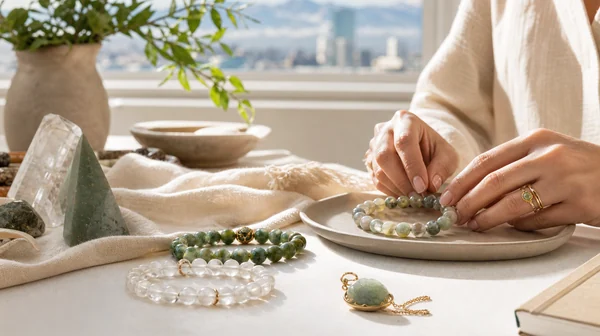
Stone can sit beside wood, glass, ceramic, metal, paper, or woven fibers. Limit the group to a few related materials so each texture remains visible. Repeating one finish, such as matte ceramic or brushed metal, can connect objects with different shapes.
Use a tray, book stack, or stand only when it supports the composition and the object remains stable. Check that rough edges and hardware do not scratch the furniture surface.
Review the Listing Evidence
A useful listing shows the full object, close details, the underside, and a scale reference. It states dimensions, weight, material wording, known processing, repairs, added color, coatings, and whether the buyer receives the exact photographed piece or a representative example.
Price, a trade name, or a generic document does not independently prove identity, origin, rarity, or quality. Ask what is documented and leave unsupported details unassigned.
Arrange One Layer at a Time
- Place the largest object and check its sightline.
- Add one medium-height item with a different outline.
- Use a smaller object to repeat a color or material.
- Leave open surface around the group.
- Photograph the arrangement from the room entrance and seating area.
Remove any item that blocks a useful surface, crowds a walkway, or makes routine cleaning difficult. The final group should look intentional from normal viewing positions, not only in a close-up photograph.
Use a Pre-Purchase Checklist
- room role and intended location;
- palette, contrast, and surrounding materials;
- object and base dimensions;
- weight, stability, and surface contact;
- actual-piece photographs and disclosed processing;
- care, packaging, return, and contact details.
Carry the Palette Into Jewelry
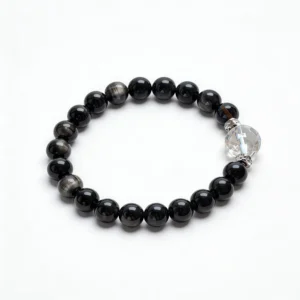
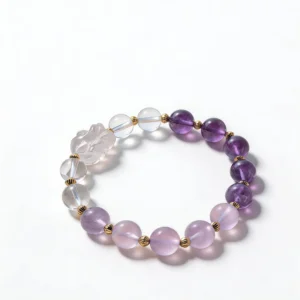
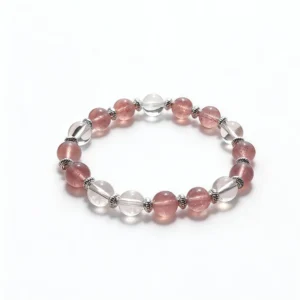
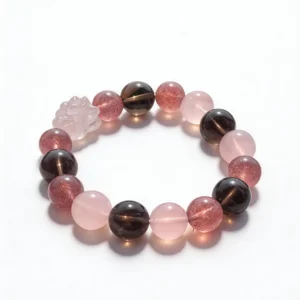
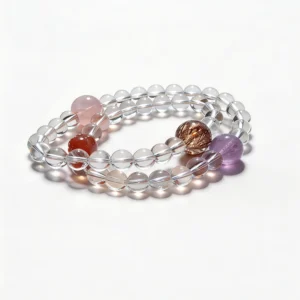
A room palette can also guide wearable stone choices without turning decor advice into a product claim. Compare the same visible features: color, translucency, pattern, bead scale, polish, and metal details.
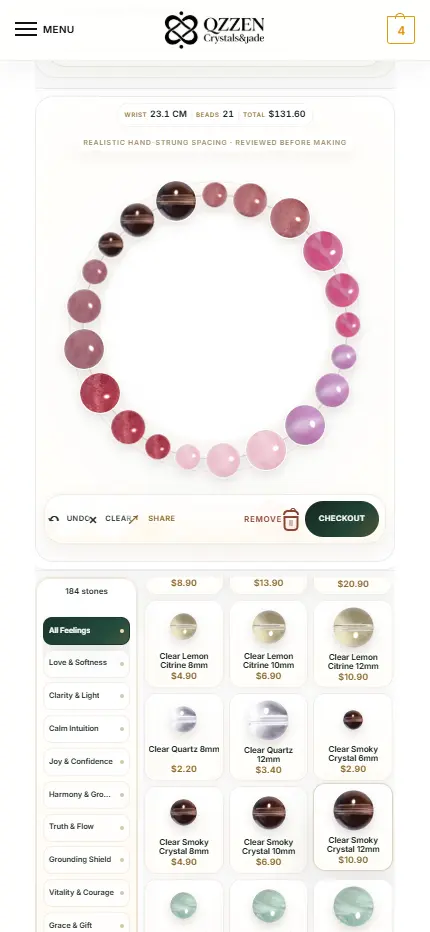
Browse the QZZEN crystal bracelet collection or the full shop for wearable pieces. For a custom arrangement, QZZEN Create lets you compare stone colors, bead sizes, and spacing before checkout.
Create With QZZEN
Translate a Room Palette Into a Bracelet
Compare stone colors, bead scale, spacing, and a finished circular layout before you order.