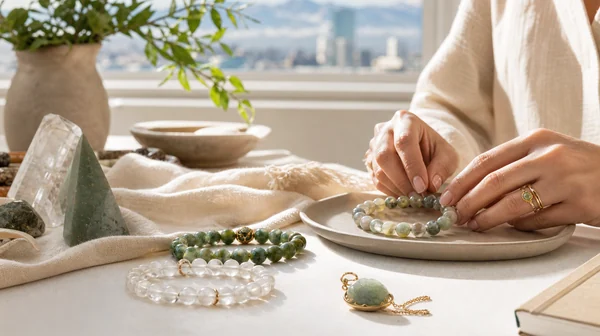


Choosing between a jade bracelet and a jade pendant is mainly a question of movement, fit, visibility, clothing, and maintenance. Both formats can carry personal or cultural meaning, but neither should be presented as a medical object or a guaranteed cause of personal change.
Start With How the Jewelry Will Be Worn
A bracelet moves with the hand and remains visible to the wearer throughout the day. A pendant moves with the torso, interacts with necklines, and may be more visible to other people. Consider the setting in which the piece will actually be used rather than choosing from a close-up image alone.
Desk work, gloves, sleeves, hand washing, sports, and tool use can make wrist jewelry less practical. High collars, layered chains, lanyards, or frequent bending can affect a pendant. The better format is the one that fits the wearer’s ordinary activities.
Compare Bracelet Contact and Movement
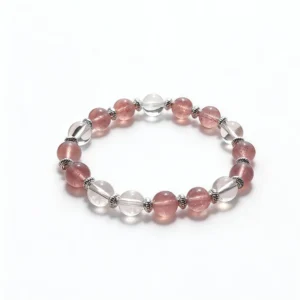
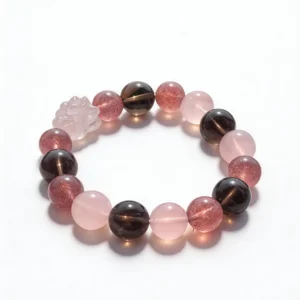
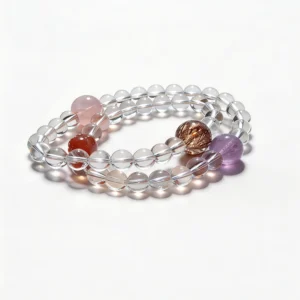
Round jade beads create repeated contact around the wrist, while a rigid bangle keeps a fixed shape. A charm or carved focal bead can rotate underneath the wrist or touch a desk surface. Test where prominent components sit when the hand turns, types, carries a bag, or rests on a table.
- Check whether the strand moves freely without sliding over the hand.
- Place large beads and charms away from frequent contact points.
- Confirm that sleeves pass over the bracelet when needed.
- Consider the dominant hand and everyday wrist accessories.
- Remove the piece when work or activity could catch the strand.
Measure Bracelet Fit Carefully
Wrist measurement, bead diameter, strand construction, and preferred ease all affect fit. Large beads reduce the inner space of a bracelet more than small beads at the same outer circumference. Rigid bangles also need sufficient hand clearance.
Use the seller’s stated sizing method and compare it with a bracelet that already fits. Determine whether a listed size means wrist measurement, inner circumference, bangle diameter, or total strand length.
Match Pendant Length to the Neckline
Pendant length includes the chain or cord, bail, and carved element. A short chain places the piece near the collar, while a longer chain changes its position relative to buttons, seams, and layered clothing. Measure the full drop instead of relying on model photography.
Check whether the bail opening fits a preferred chain and whether the pendant faces forward. A heavy or wide carving may need a stronger chain or cord and can pull lightweight fabric differently from a small piece.
Compare Visual Scale
A bracelet is read as a sequence around the wrist. Its appearance depends on bead diameter, count, spacers, hardware, and how much of the strand is visible at once. A pendant is usually read as one central shape, so silhouette and carving proportions carry more visual weight.
Use millimeter dimensions and, when available, item weight. Cropped and enlarged photographs can make a subtle pendant look oversized or make substantial bracelet beads appear smaller than they are.
Evaluate Color and Variation in Context
Jadeite and nephrite can appear in varied colors, translucencies, textures, and patterns. A bracelet may combine many beads with visible differences, while a pendant may display variation across one larger surface. Neither uniformity nor variation alone establishes quality or authenticity.
Review photographs in neutral light and ask whether they show the exact item or a representative example. Material identity, processing, and geographic origin require appropriate disclosure or documentation; color is not sufficient proof.
Choose a Format for Gifting
A pendant can be easier to size if the recipient already wears a known chain length. A bracelet requires more precise wrist information, especially when beads are large or the design is rigid. In either case, confirm whether the chain, cord, or presentation box is included.
- Identify whether the recipient usually wears wrist or neck jewelry.
- Check a known bracelet size or chain length discreetly.
- Select a scale that suits the recipient’s existing jewelry.
- Explain any symbolism as a personal message, not a promised result.
- Retain the material, care, and return information with the gift.
Check Construction Before Buying
For bracelets, review drill holes, strand material, knots, elastic, clasps, spacers, and charm attachments. For pendants, inspect the front, back, carving edges, bail, setting, cord, or chain. Clear side views often answer questions that a single front image cannot.
Ask for known processing and the exact scope of any certificate. Words such as natural, untreated, antique, rare, or investment grade need evidence connected to the specific item.
Run a Short Wear Test
When return conditions allow, try the jewelry over a short period indoors before routine wear. Keep tags and packaging intact, and avoid exposure to water, cosmetics, or impact during the test.
- Confirm that the piece stays in its intended position.
- Check for sharp edges, pinching, or hardware contact.
- Try the bracelet with sleeves and normal hand movement.
- Try the pendant with common necklines and outer layers.
- Compare the received material and dimensions with the listing.
Care and Store Each Format
Use cleaning guidance appropriate for every component, including jade, metal, cord, elastic, adhesive, coatings, and other stones. Avoid impacts, abrasive contact, and unverified chemical or ultrasonic methods.
Lay pendants so chains do not knot or scrape the carving. Store bracelets separately so beads and metal components do not strike other jewelry. Inspect cords, elastic, clasps, and bails periodically and stop wearing a piece if damage appears.
Compare Jade Bracelets and Pendants
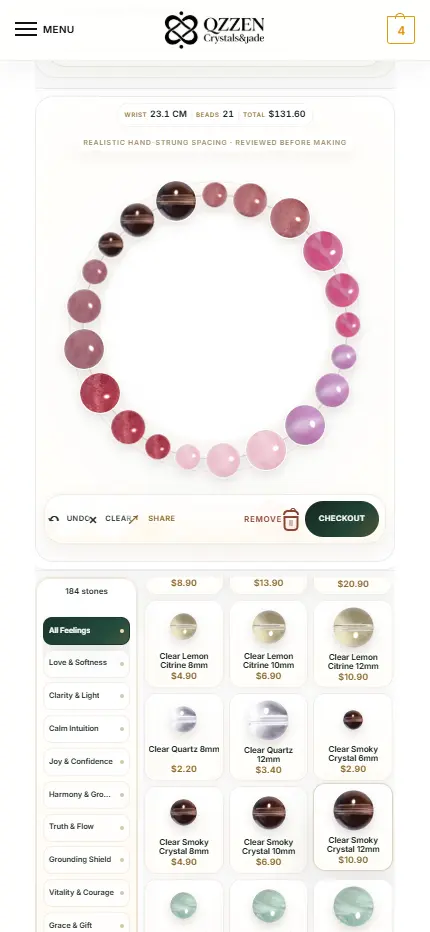
Browse the QZZEN jade collection, use the bracelet size guide, or open QZZEN Create to compare bead size and bracelet layout before checkout.
Create With QZZEN
Preview the Bracelet Option Before You Choose
Compare jade bead diameter, adjacent materials, and a finished circular layout before you order.