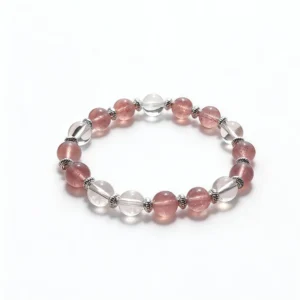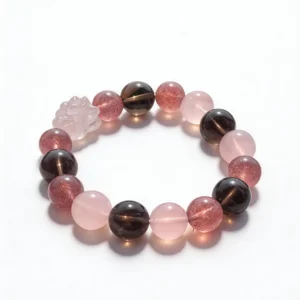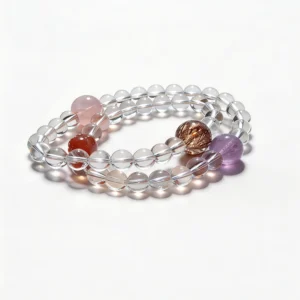


Jade jewelry should be evaluated as a combination of material, workmanship, dimensions, and construction. A bracelet or pendant can look polished in a front-facing photograph while still leaving important questions about drill holes, edges, cord, hardware, or the back of a carving unanswered.
Start With the Stated Jade Material
Jade is a commercial and cultural term most commonly associated with jadeite and nephrite. A listing should state which material is being offered when that information is known. Additional wording such as Hetian jade may describe a trade or geographic context and should be supported rather than inferred from color alone.
Ask whether the material is natural, laboratory-created, composite, dyed, coated, impregnated, stabilized, or otherwise processed. Appearance and price cannot independently establish identity, geographic origin, or lack of processing.
Inspect Polish and Surface Condition
Use sharp photographs taken from more than one angle. Look for an even surface, intentional matte or polished areas, and a consistent finish around curves. Reflections can reveal scratches, flat spots, chips, pits, or residue that diffuse lighting may hide.
Natural internal features are different from surface damage. A visible line may be an inclusion, a repaired break, a scratch, or a reflection. Request a close view and written clarification when the distinction affects the purchase.
Check Bead Holes and Strand Construction
On jade bead jewelry, the area around each drill hole matters because rough edges can abrade cord. Photographs should show holes without large chips, visible residue, or sharp rims. Hole size should also suit the selected elastic, thread, wire, or knotting method.
- Check whether knots are hidden, covered, or intentionally visible.
- Look for even spacing without pinched cord between beads.
- Confirm that metal spacers do not cut into adjacent bead surfaces.
- Ask what restringing method is suitable for the construction.
- Inspect elastic or thread periodically for fraying and loss of recovery.
Read Carving Quality From Every Side
A carved pendant should be shown from the front, back, sides, and through any opening. Compare edge thickness, recesses, pierced sections, and the transition between raised and cut areas. Fine-looking detail is less useful if a narrow bridge or sharp point is vulnerable during ordinary handling.
Symbols should be described with appropriate context. Visual resemblance alone does not prove an age, maker, tradition, or origin. When documentation is absent, a literal description of the motif is more accurate.
Evaluate Bails, Clasps, and Settings
Hardware determines how a jade element hangs and how easily the piece can be worn. Check the stated metal, attachment point, opening size, clasp type, and whether a chain or cord is included. For a pendant, confirm that the bail fits the intended chain and allows the carving to face forward.
Prongs, bezels, caps, and glued fittings should sit evenly against the stone. Product images cannot prove long-term durability, but clear side and rear views can expose gaps, bent components, or an attachment that depends on a very small contact area.
Compare Dimensions, Weight, and Fit
Photographs can distort scale. Use millimeter dimensions and, when provided, weight rather than relying on a hand-held image. Bead diameter affects strand length, wrist clearance, and how prominently a bracelet sits. Pendant dimensions should distinguish the jade element from the total drop including its bail.
- Measure the wrist or intended chain length.
- Note the bead diameter or pendant dimensions in millimeters.
- Confirm whether bracelet sizing describes wrist fit or inner circumference.
- Account for large beads, spacers, charms, and rigid components.
- Compare the measurements with jewelry already worn comfortably.
Review Listing Evidence Before Checkout
A useful listing connects its claims to the exact item or clearly states when photographs are representative. It should identify material wording, measurements, known processing, included components, and visible variation. A certificate is relevant only to the extent that its issuer, scope, results, and connection to the item can be checked.
Keep unsupported fields unassigned. Terms such as authentic, untreated, rare, antique, or investment grade require more than polished marketing copy.
Inspect Jade Jewelry When It Arrives
Examine the piece before removing tags or wearing it. Compare it with the listing, photograph the package and item, and check the surfaces, drill holes, carving edges, fittings, clasp, and strand tension in neutral light.
- Verify the received dimensions and included components.
- Check for transit damage or loose hardware.
- Confirm that the piece sits and moves as expected.
- Retain receipts and item-specific documentation.
- Follow the published return process if a material discrepancy appears.
Care for the Whole Piece
Cleaning instructions must account for the jade, metal, cord, adhesive, coatings, and any other stones together. A soft dry or slightly damp cloth is a conservative starting point for many finished pieces, but seller or maker guidance should control when construction is known.
Avoid impacts, abrasive storage, and unverified chemical or ultrasonic methods. Store pieces separately and stop wearing a strand when cord wear, a loose fitting, or a damaged edge appears.
Compare Jade Jewelry Formats
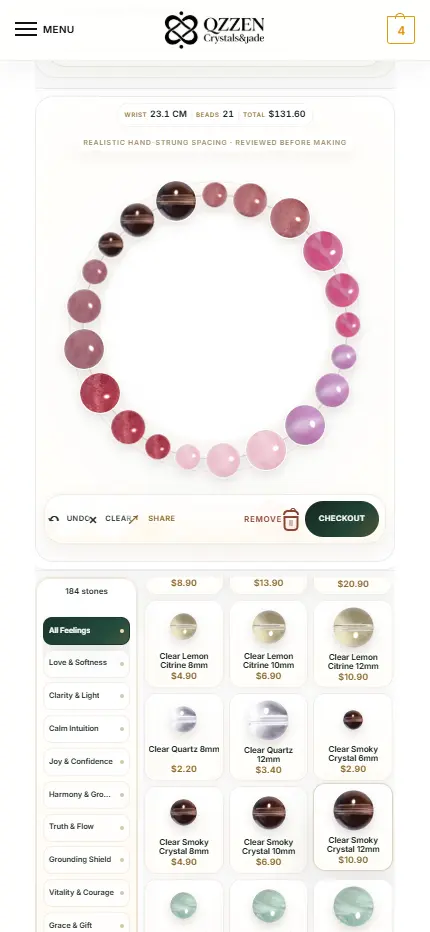
Browse the QZZEN jade collection, use the bracelet size guide, or open QZZEN Create to compare bead diameter and strand layout before checkout.
Create With QZZEN
Check Bead Size and Spacing in a Full Layout
Compare jade bead diameter, adjacent materials, and spacing in a finished circular bracelet before you order.