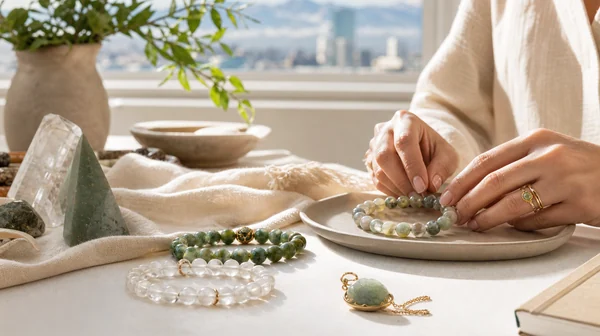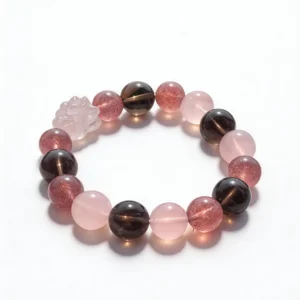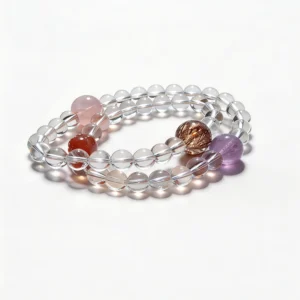


April styling often moves between cool mornings, brighter afternoons, work layers, and early outdoor plans. Jade can fit that transition through color and form, but no shade or carving is objectively assigned to a mood, birth date, or zodiac sign. Use mood as a creative brief: decide how quiet, fresh, grounded, or graphic the finished look should feel, then translate that preference into visible design choices.
Translate a mood into design choices
Write three practical words for the look, such as light, minimal, and soft or structured, dark, and bold. Connect each word to something visible: color value, contrast, bead scale, surface, repetition, or hardware. This keeps the styling process specific. It also avoids suggesting that jade changes emotions or produces a spiritual, medical, or astrological result.
Start with color families
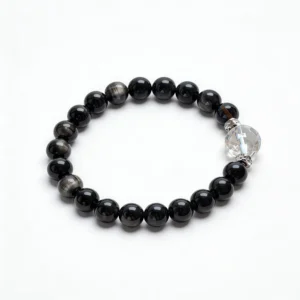
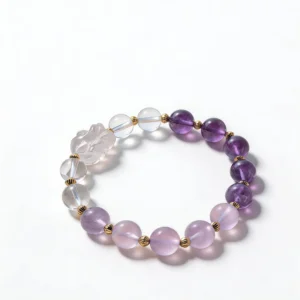
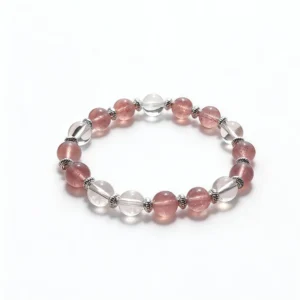
Pale green, white, cream, gray-green, yellow-green, and deeper green each interact differently with a wardrobe. Light tones can blend with white shirts, soft gray, pale denim, and muted prints. Deeper greens create clearer contrast against black, navy, and warm neutrals. Mixed-color jade can become the focal point, while a narrow palette is easier to repeat across several outfits. Screen color is approximate, so compare the listing’s photographs and written description.
Separate styling preference from quality
GIA’s jade quality overview considers color together with transparency, texture, and workmanship. A preferred spring color is not automatically rarer, more durable, or more valuable. Inspect even polish, finished drill holes, carving edges, symmetry where intended, and hardware. Read dimensions and treatment disclosure instead of treating a mood label as product evidence.
Choose form and visual weight
A pendant creates one vertical focal point and works well with open collars or simple necklines. A bead bracelet repeats color around the wrist and remains visible during daily tasks. A small carving can feel private; a larger carving has more graphic presence. For bracelets, compare bead diameter and total fit through QZZEN Size Help. Scale should follow comfort and wardrobe proportion, not a supposed personality rule.
Use contrast deliberately
- For a quiet look, keep bead colors close and repeat one metal tone.
- For a fresh accent, place one lighter focal bead within a restrained sequence.
- For a graphic look, pair deeper jade with a plain, high-contrast sleeve.
- For a layered look, vary scale while leaving enough space to prevent repeated impact.
Test the combination in daylight and indoor light. Remove one element if the jewelry competes with a patterned garment, watch, or prominent neckline.
Read the material statement
Jade is a gem name applied to jadeite and nephrite, as the GIA jade description explains. Color or seasonal styling cannot establish which material is present, whether it has been treated, or where it originated. Check the exact listing and documentation. QZZEN’s Authenticity Promise provides a route for questions about stated material information.
Create an April capsule
Select one jade piece that works with at least three outfits already in the closet. Photograph those combinations in ordinary light, then note which neckline, sleeve, or color pairing is easiest to repeat. Browse The Jade Collection for current forms, while treating each product page as the source for its dimensions and claims.
Build by mood without assigning a destiny
In QZZEN Create, begin with one color family and a comfortable bead scale. Use an uninterrupted sequence for a calm visual rhythm, balanced accents for structure, or a single focal point for contrast. Preview the complete circle before checkout. The tool helps evaluate layout; it does not determine astrological compatibility or guarantee an emotional outcome.
Bottom line
April jade styling is strongest when mood becomes a concrete visual plan. Choose a color family, decide the level of contrast, match form and scale to the wardrobe, and verify material facts separately. The result can feel personal and seasonal without relying on zodiac rules or promises about what the jewelry will cause.