
Why Everyone’s Getting Into Crystals Right Now
If you’ve been scrolling through social media lately, you’ve probably noticed that natural crystals are everywhere — from wellness influencers stacking bracelets on their wrists to interior designers placing amethyst clusters on coffee tables. And honestly, the hype is real. There’s something about holding a piece of the earth that’s millions of years old that just hits different. But here’s the thing: with all this popularity comes a flood of fake crystals and lab-grown stones being sold as the real deal. Whether you’re drawn to crystals for their beauty, their energy, or just because they look cool on your nightstand, knowing how to spot the genuine article is the first step to building a collection you’ll actually love.
The crystal market has exploded over the past few years, and 2026 is shaping up to be the biggest year yet. More people are turning to crystal jewelry as part of their daily wellness routines — pairing them with meditation, yoga, and even their morning coffee rituals. But walking into a crystal shop or browsing online for the first time can feel overwhelming. There are hundreds of stone types, price points all over the map, and way too many sellers making bold claims. This guide is here to cut through the noise and give you a straightforward roadmap for buying your first natural crystals with confidence.
The Crystal Market Is Booming — Here’s What to Know
The global crystal and meaningful stone market is projected to keep growing through 2026 and beyond, driven largely by younger buyers who see crystals as part of a holistic lifestyle. Searches for terms like “crystal bracelet for everyday stress” and “best crystals for beginners” have surged on Google and TikTok alike. Amethyst, rose quartz, and clear quartz remain the top three most popular stones, but lesser-known varieties like strawberry quartz, kunzite, and sunstone are gaining serious traction. The trend isn’t just about aesthetics — people are genuinely curious about the energetic properties of different stones and how they can incorporate them into everyday life.
What’s driving this boom? A big part of it is accessibility. You no longer need to visit a specialty metaphysical shop to find quality crystals. Online retailers like QZZEN have made it possible to browse curated collections from your couch, complete with detailed descriptions of each stone’s origin, properties, and care instructions. But with easier access comes more responsibility on the buyer’s side. Not every seller is transparent about where their stones come from or whether they’ve been treated, dyed, or manufactured in a lab. That’s why learning the basics of crystal identification matters — even if you’re just buying your first bracelet.
How to Identify Real Natural Crystals
Let’s get into the practical stuff. When you’re holding a crystal — or looking at photos online — there are several telltale signs that separate a genuine natural stone from a fake or lab-created one. First up: temperature. Real crystals feel cool to the touch, even in a warm room. Glass and plastic imitations warm up quickly in your hand, but natural quartz and amethyst will stay noticeably cooler for longer. It’s a simple test, but it works surprisingly well when you’re shopping in person. Pick up the stone, hold it for a few seconds, and pay attention to how fast it warms up against your skin.
Next, look at the inclusions and imperfections. This is probably the most reliable visual cue. Natural crystals almost always have tiny internal features — small cracks, mineral inclusions, color variations, or cloudy patches. A stone that looks absolutely flawless and perfectly uniform in color is more likely to be glass or synthetic. Real amethyst, for example, typically shows subtle color zoning where the purple shifts from lighter to darker areas. Real rose quartz often has a slightly milky or hazy quality rather than being perfectly transparent. These “imperfections” are actually proof of authenticity — they’re the fingerprints of nature.
Weight is another solid indicator. Natural crystals are denser than most imitations. A real quartz crystal will feel heavier in your hand than a glass bead of the same size. If you have a kitchen scale handy, you can even compare the weight of a suspect stone against known measurements for that crystal type. And here’s a pro tip: scratch resistance matters too. Quartz ranks 7 on the Mohs hardness scale, which means it should be able to scratch glass easily. If your “quartz” bracelet can’t leave a mark on a glass surface, something’s off. Just be careful not to damage anything you haven’t paid for yet.
Smart Shopping Tips for Crystal Beginners
Now that you know what to look for physically, let’s talk about the buying process itself. The single most important thing you can do as a new collector is buy from reputable sellers. Look for shops that clearly state where their stones are sourced, provide detailed product descriptions, and show multiple high-quality photos from different angles. A trustworthy seller won’t shy away from showing you the natural inclusions and variations in their stones — in fact, they’ll highlight them. At QZZEN’s crystal jewelry collection, every piece comes with information about the stone type, origin, bead size, and energetic properties, so you know exactly what you’re getting.
Price is another clue, though it’s not always straightforward. If a deal seems too good to be true, it probably is. A genuine natural amethyst bracelet with quality beads shouldn’t cost the same as a cup of coffee. That said, crystals don’t have to break the bank either. Mid-range pricing usually signals a fair deal for authentic stones. Be especially cautious of sellers offering rare stones like moldavite or high-grade labradorite at suspiciously low prices — these are among the most commonly faked crystals on the market. When in doubt, ask the seller directly about sourcing and whether the stones have been heat-treated or dyed. Honest sellers will give you a straight answer.
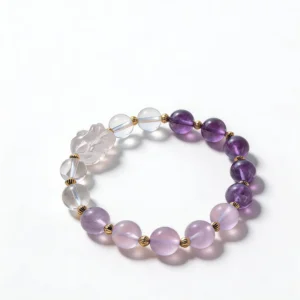
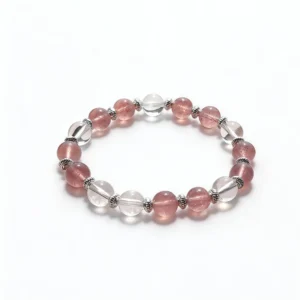
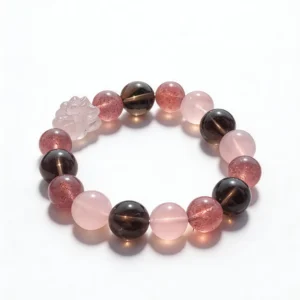
Starting small is totally fine — and actually recommended. You don’t need to drop hundreds of dollars on your first purchase. A single crystal bracelet is a perfect entry point because you get to wear it daily, feel the stone against your skin, and start noticing how different crystals make you feel. Something like the Strawberry Quartz White Crystal Bracelet is a gorgeous beginner-friendly option that pairs well with almost any outfit. Or if you’re drawn to deeper energy work, the Amethyst Lavender Crystal Nine-Tailed Fox Bracelet combines stunning aesthetics with calming amethyst energy.
A Real-World Crystal Buying Story
Here’s something that actually happened to a friend of mine last year. She’d been eyeing a gorgeous deep-purple amethyst cluster at a local flea market — the seller was asking just twenty bucks for a piece that would normally retail for well over a hundred. The color was incredibly saturated and perfectly even throughout, which she thought was a sign of quality. She almost bought it on the spot. But something felt off, so she pulled out her phone and did a quick comparison with photos of natural amethyst online. Sure enough, the color was way too uniform. Natural amethyst almost always shows some degree of color zoning — areas where the purple is deeper or lighter. She asked the seller about it, and he admitted it had been heat-treated and dyed to enhance the color. Not exactly fake, but definitely not what was being advertised.
The lesson here isn’t that you need to become a gemologist before buying your first crystal. It’s that a little bit of knowledge goes a long way. Just understanding the basics — like checking for natural inclusions, feeling the weight, and knowing what realistic pricing looks like — can save you from spending money on something that isn’t what it claims to be. And honestly, once you start paying attention to these details, shopping for crystals becomes even more fun. You develop an eye for quality, and you start appreciating the unique character of each stone. Every natural crystal is literally one of a kind, and that’s what makes collecting them so rewarding.
Ready to Start Your Crystal Collection?
If you’ve made it this far, you’re already ahead of most first-time buyers. You know how to check for authenticity, what red flags to watch for, and why buying from a transparent seller matters. The next step is the fun part — actually picking out your first stones. Whether you’re drawn to the calming purple of amethyst, the warm glow of sunstone, or the gentle pink of rose quartz, there’s a crystal out there that’s going to feel like it was meant for you. And when you find it, you’ll know. Every piece in the QZZEN Spiritual Accessories collection is sourced from trusted suppliers, handpicked for quality, and ships free across the US with a 30-day return guarantee. Plus, every bracelet arrives in a gift-ready box — so even if you’re buying for yourself, it still feels like unwrapping a present.
Don’t overthink it. Start with one piece that catches your eye, wear it for a week, and see how it feels. That’s the beauty of natural crystals — they’re personal. Your collection will grow naturally over time as you discover which stones resonate with you. And remember: the best crystal is always a real one. Shop with confidence, trust your instincts, and enjoy the journey. 🆕 Check out our newest arrivals below — each one is 100% natural, hand-selected, and ready to ship today.
Create With QZZEN
Design a Bracelet From the Stones You Just Learned About
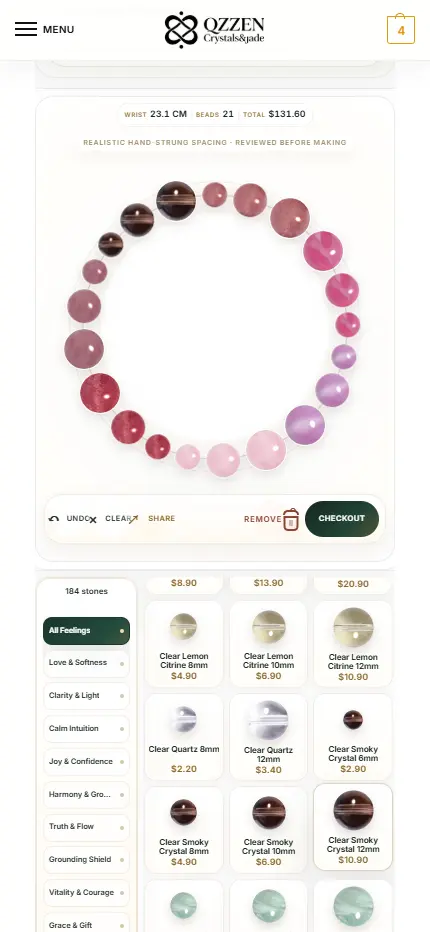
Use QZZEN Create to test bead size, stone combinations, and a finished circular bracelet layout before you order. It is a simple way to turn what you learned in this guide into a bracelet that matches your wrist, your style, and the small ritual you want to keep.


[…] here: if a stone feels off, cleanse it. If you’re just getting started with crystals, our natural crystal buying guide for new collectors covers the basics of building and caring for a […]