
Why Natural Crystal Identification Matters
Buying crystals online should feel fun, not like a guessing game. Still, the market is full of dyed stones, glass lookalikes, heat-treated pieces, and listings that use beautiful language without giving buyers much proof. That is why natural crystal identification is worth learning before you click add to cart. You do not need a lab kit to make better choices. You need a clear checklist, a few visual habits, and the confidence to slow down when a stone looks too perfect for the price.
At QZZEN, we see customers choose crystal jewelry for substantial, comfort, styling, and daily ritual. Those reasons are personal, so the piece should feel honest too. A natural crystal can still have color variation, tiny pits, cloudiness, fine internal lines, or uneven tone from bead to bead. Those details are not flaws. They are often the quiet signs that the material came from the earth instead of a mold, coating, or factory-perfect batch.
Start With Color and Pattern
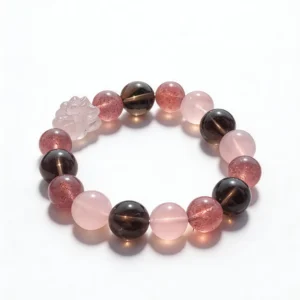
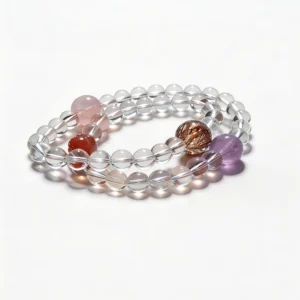
The fastest first check is color. Natural stone usually has movement, depth, or small shifts when you turn it under light. Dyed stones often look flat, overly saturated, or strangely even across every bead. If a bracelet has twenty beads and every one is identical, pause for a second. Some stones are naturally consistent, but many popular crystals show small differences in shade, transparency, or pattern. Look at product photos closely, especially close-up texture shots rather than only bright lifestyle photos.
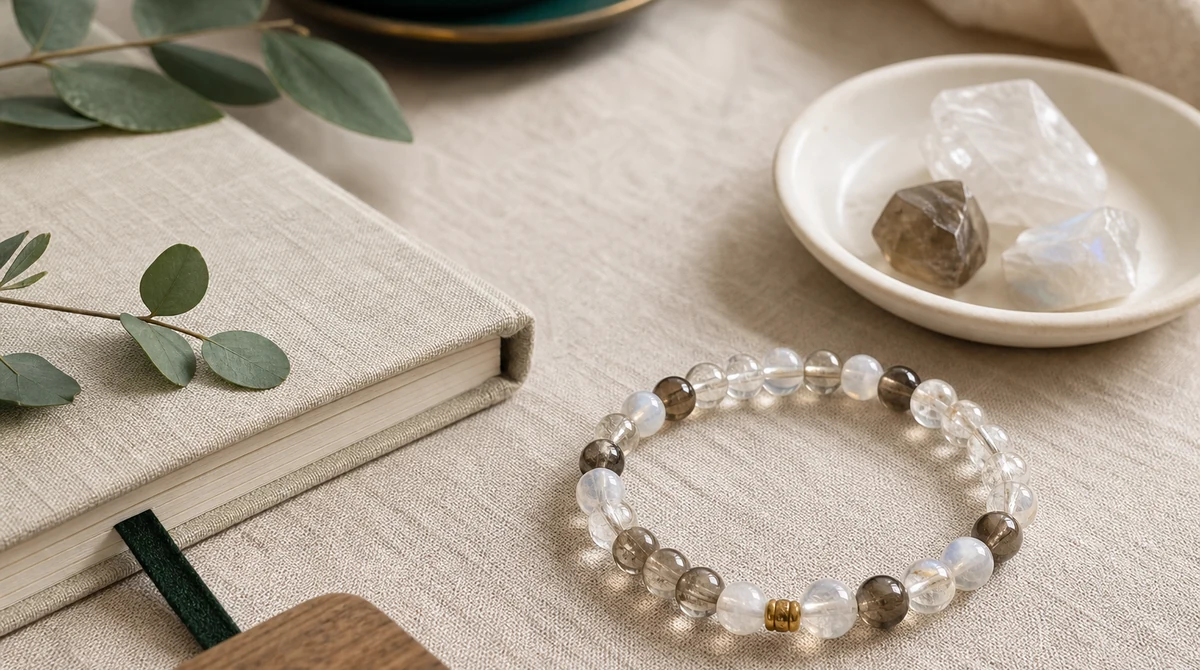
Pattern matters just as much as color. Natural quartz, amethyst, obsidian, fluorite, and jasper can carry veils, bands, smoky zones, mineral flecks, or soft internal clouds. Glass imitations may show bubbles, swirl marks, or a surface shine that feels too smooth and watery. For bracelets, compare several beads in one photo. Real material usually tells a slightly different story on each bead, while artificial pieces often repeat the same effect again and again.
Check Weight, Temperature, and Finish
If you can handle the piece in person, weight and temperature help. Many natural crystals feel cooler at first touch and have a satisfying weight for their size. Plastic is usually warmer and lighter. Glass can also feel cool, so this is not a final answer, but it is a useful clue when combined with other checks. A stone that looks large, claims to be natural, and feels unusually light deserves a closer look before you buy.
Finish is another clue. Polished natural beads should feel smooth, but not lifeless. Look around the drill holes, edges, and any carved details. Heavy dye can collect near holes or inside tiny surface pits, leaving darker rings or unnatural staining. A good seller should be comfortable showing close-up photos from different angles. If the listing only offers one heavily edited image, treat that as a reason to ask questions rather than a reason to rush.
Use Price as a Reality Check
Price is not proof by itself, but it is a reality check. Some crystals are affordable because the material is common, the beads are small, or the grade is modest. Other stones are expensive because color, clarity, origin, carving work, or rarity raises the cost. When a listing promises rare natural material at a price far below the normal market, it may still be beautiful, but the description needs stronger evidence. Ask what the material is, whether it is dyed or treated, and what photos show the actual item.
The safest shopping habit is to compare several listings before deciding. Read the wording carefully. Phrases like “crystal style,” “inspired by,” “synthetic,” “reconstituted,” or “enhanced color” may mean the piece is not fully natural. That does not make it useless, but it should be priced and described honestly. Natural crystal identification is really about matching the claim, the photo, the price, and the seller’s transparency.
A Simple Buyer Checklist
- Look for natural variation in color, pattern, and transparency.
- Zoom in on drill holes and edges for dye concentration.
- Compare the price with similar stones from several sellers.
- Ask for daylight photos when a listing looks heavily edited.
- Choose sellers who clearly explain material, treatment, size, and return policy.
For everyday shoppers, this checklist is enough to prevent most disappointing purchases. You do not need to become a gemologist to choose better pieces. You simply need to slow down and let the details speak. A trustworthy crystal should not rely only on dramatic claims. It should have clear photos, practical measurements, plain-language descriptions, and a seller willing to answer reasonable questions before checkout.
Helpful QZZEN Guides
- How to cleanse crystals without overthinking it
- Best crystals for everyday clear that actually work
- How to charge crystals with simple daily methods
Shop New QZZEN Picks 🆕
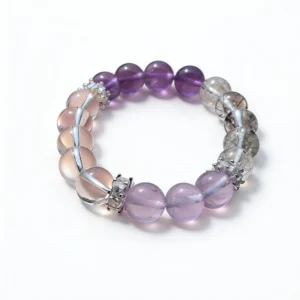
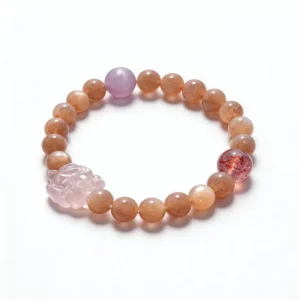
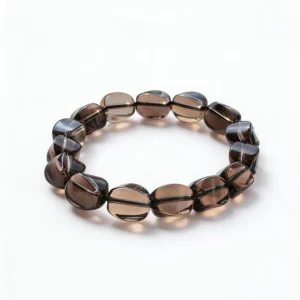
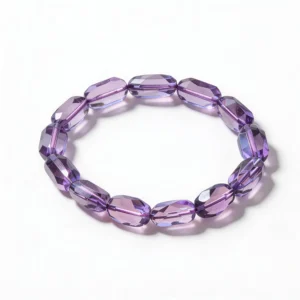
If you want a practical place to start, browse our newest crystal bracelets and small-batch pieces below. Each product page includes size details, close-up images, and clear add-on choices so you can compare the stone, fit, and final price before buying.
Create With QZZEN
Design a Bracelet From the Stones You Just Learned About
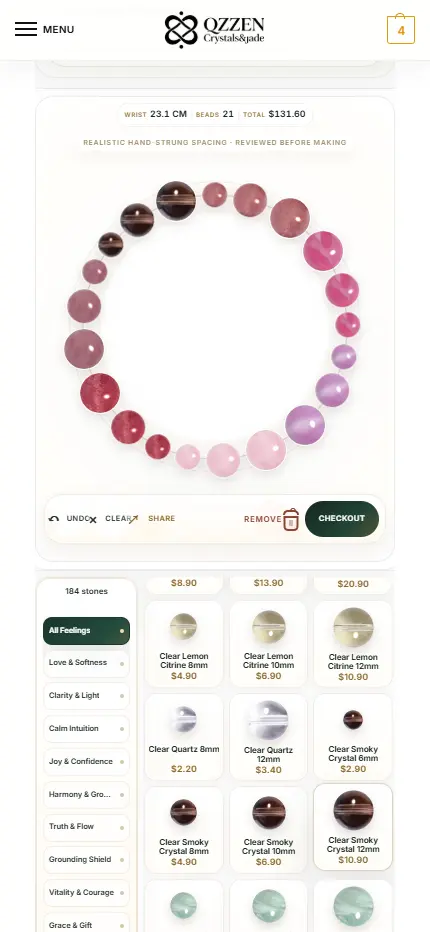
Use QZZEN Create to test bead size, stone combinations, and a finished circular bracelet layout before you order. It is a simple way to turn what you learned in this guide into a bracelet that matches your wrist, your style, and the small ritual you want to keep.

QZZEN
Every stone carries a feeling—learn the meaning, then use QZZEN Create to design a bracelet that feels personal before checkout.