You’ve bought a jade piece — or you’re considering one. But how do you know if it’s genuinely valuable or an elaborate fake? The jade market is one of the most counterfeited in the gemstone world, with imitations ranging from convincing to laughably obvious.
Here’s the direct truth about real jade vs. fake jade — and how to tell the difference before you spend your money.
The Uncomfortable Reality of the Jade Market
Estimates suggest that the majority of “jade” sold in tourist markets, online marketplaces, and even some jewelry stores is not genuine jade at all. Common substitutes include:
- Serpentine — soft, easily scratched, often dyed green
- Aventurine — a quartz variety that resembles jade
- Dyed quartzite — cheap stone with artificial color
- Glass — surprisingly common in low-end markets
- Plastic — lightweight, warms quickly in hand
- Treated jade (Grade B/C) — real jade, but chemically altered to look better
Even “treated jade” — which is technically jade — is considered worthless by serious collectors because the chemical treatment destroys its natural properties and causes it to degrade over time.
Quick Tests Anyone Can Do
The Weight Test
Real jade is dense and heavy for its size. Pick it up and notice — does it feel substantial? Glass can mimic this, but plastic and most imitations feel noticeably lighter than genuine jade.
The Temperature Test
Hold the piece in your palm. Real jade stays cool for 20-30 seconds before slowly warming. Plastic warms almost immediately. Glass warms faster than jade. This is one of the most reliable quick tests.
The Scratch Test
Try to scratch an inconspicuous spot with a steel knife. Real jade (hardness 6-7) will not scratch. Serpentine (hardness 3-4) will scratch easily. Note: don’t do this on a piece you’re considering buying without permission.
The Sound Test
For bangles or beads, tap two pieces together. Real jade produces a clear, resonant ring. Plastic thuds. Glass rings differently — higher and shorter. With practice, this becomes one of the most reliable tests.
The Visual Test
Examine the color carefully:
- Natural jade has organic, uneven color distribution — no two areas look identical
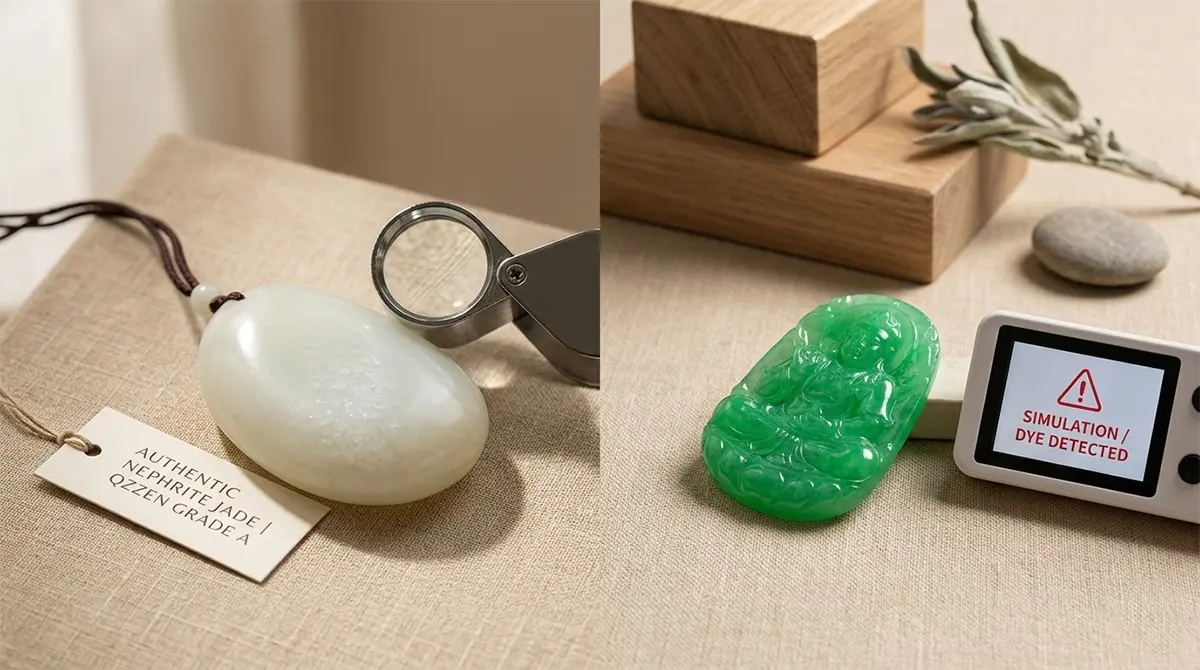
- Dyed jade often shows color concentrated in cracks and surface irregularities
- Real jade has a waxy, not glassy surface luster
- Under magnification, nephrite shows a fibrous, interlocking crystal structure
What Makes Jade Valuable?
Genuine Grade A jade’s value comes from:
- Natural origin — no chemical treatment
- Color quality — intensity, evenness, and rarity of color
- Translucency — how light passes through the stone
- Texture — fine-grained, smooth texture indicates quality
- Craftsmanship — quality of carving or cutting
The Only Safe Way to Buy Jade
Buy from sellers who provide written certification of natural, untreated jade — and who stand behind their products with a return policy. This is the only way to protect yourself in a market full of imitations.
At Qzzen, every piece in our jade collection is certified natural jade with full authenticity documentation. We offer free shipping on orders over $100 and a 30-day return guarantee — because we’re confident in every piece we sell.
Explore Our Jade Collection


Free shipping on orders over $100. All products include 30-day hassle-free returns.