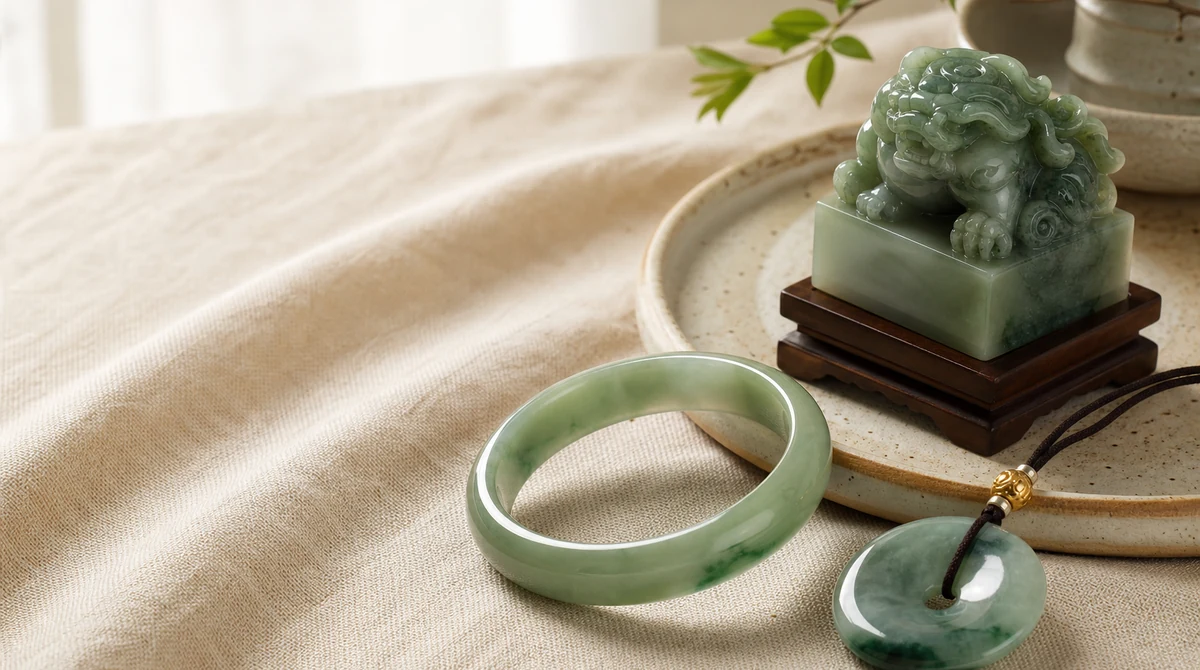
An “ancient jade seal” description combines several claims: that the object is a seal, that its material is jade, that it belongs to a stated period or culture, and that its ownership history is legitimate. Shape, patina, symbolism, or a carved inscription cannot establish all of those points on their own.
Separate object type, material, date, and ownership history
First ask whether the base is carved for an impression and whether a readable seal face exists. Then treat mineral identity, production date, maker or workshop, cultural attribution, and provenance as separate questions requiring different evidence.
Understand the broader historical context
GIA’s jade history and lore outlines jade’s long cultural importance. Seals could serve administrative, personal, artistic, or collecting roles, but broad historical significance does not date or authenticate an individual object.
Read the material claim carefully
GIA’s jade overview distinguishes jadeite and nephrite. The companion explanation of jade color and mineral identity shows why appearance alone is insufficient. A seller should state what is known and how it was determined. Color, a smooth polish, weight, coolness, or a resonant sound cannot by themselves verify the material, geographic source, treatment, or age.
Document every face
Request straight, evenly lit images of the top, sides, base, seal face, edges, drilled openings, chips, repairs, and dimensions. Raking light can reveal carving and wear but may exaggerate surface texture. Transcriptions and translations should identify who prepared them and how uncertain characters were handled.
Treat wear and patina as observations
Abrasions, staining, deposits, softened edges, tool marks, and repairs can inform an expert examination, but none is an automatic clock. Artificial aging and later recutting are possible. Avoid cleaning, polishing, rubbing an impression, or applying chemicals before qualified review.
Ask for provenance, not just a story
Useful provenance identifies prior owners, dates, invoices, auction records, collection labels, export information, and gaps. Confirm that sale and export are lawful for the relevant jurisdictions. QZZEN’s Authenticity Promise is a route for item-level questions, not a substitute for specialist authentication of an antiquity claim.
Use conservative transaction steps
For a significant purchase, consider independent gemological material testing and qualified art-historical review. Read shipping information, document condition on arrival, and preserve packaging under the returns policy.
Bottom line
An ancient jade seal claim is credible only when material, function, inscription, date, provenance, condition, and legal ownership are addressed separately. A compelling motif or surface is a reason to investigate, not a conclusion.