

There is no reliable home shortcut that can prove a piece is real Hetian jade. A better approach is to compare the seller’s material description, photographs, dimensions, treatment notes, and return terms before you buy. This guide gives U.S. shoppers a practical checklist for separating useful evidence from confident-sounding claims.
Start with the listing evidence
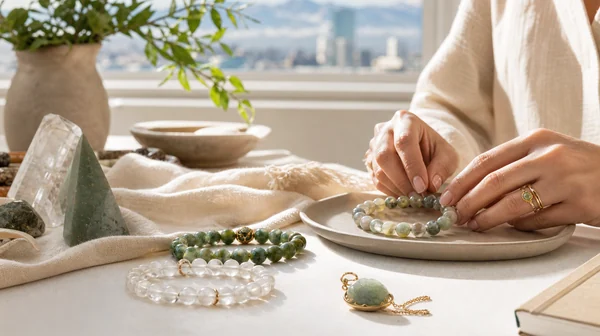
Look for a specific material description rather than a broad word such as “jade.” A listing should say whether it is describing nephrite, jadeite, or another material, and it should explain any treatment or composite construction. Clear photos from more than one angle, bead or pendant measurements, and a stated weight are more useful than a dramatic color name. If the listing avoids basic facts, pause before treating the piece as a verified material.
Read color and texture carefully
Natural jade can show variation in color, translucency, and surface texture. Nephrite is often described as having a soft, waxy luster, while jadeite can appear brighter or more saturated; appearance alone does not establish identity or value. The GIA jade quality guide is a useful reference for comparing color, transparency, texture, and cut without turning one visual trait into a guarantee.
Use photos as questions, not proof
Zoom in on bead holes, carved edges, polish, and transitions between colors. Compare the same item in natural-looking light and ask whether the surface looks consistent around the whole piece. A photograph can help you spot missing information, but it cannot replace a qualified report or a seller who clearly discloses what is and is not tested. Avoid scratch, heat, chemical, or impact tests: they can damage jewelry and do not create a dependable identification result.
Check fit and construction too
Material confidence is only one part of a good purchase. Measure your wrist and compare the inner circumference with the QZZEN size guide. For bracelets, inspect the elastic or cord, knot area, bead-hole finish, and whether the listed bead size matches the photos. For pendants, check the bail, chain or cord, and the thickness of carved sections. These details tell you whether the item is likely to be comfortable and wearable.
Ask the seller focused questions
Useful questions are specific: What material name is being used? Is the stone treated, dyed, filled, or assembled from multiple materials? Are the photographs of the exact item? What happens if the item does not match the description? QZZEN’s Authenticity Promise explains the information we aim to disclose; it is still sensible to read each product listing for its own material and construction details.
Care after you buy
Keep jade away from harsh cleaners, perfume, ultrasonic equipment, and abrasive storage. Wipe it with a soft cloth after wear and store it separately from harder stones and metal pieces. The GIA jade care guidance recommends gentle cleaning and careful handling. Inspect elastic or cord periodically, especially on heavier bracelets.
Design the bracelet after the facts are clear
Once the material and construction information make sense, use QZZEN Create to compare bead scale, color balance, and a finished circular layout. The builder can help you judge whether a jade mix will feel subtle, balanced, or too heavy before checkout; it does not certify the material.
Bottom line
To assess whether Hetian jade is real, prioritize transparent material language, clear photographs, measurements, treatment disclosure, and a usable return path. No single home test can establish authenticity. A careful listing review and, when needed, qualified testing give you a more defensible buying decision than a dramatic promise.