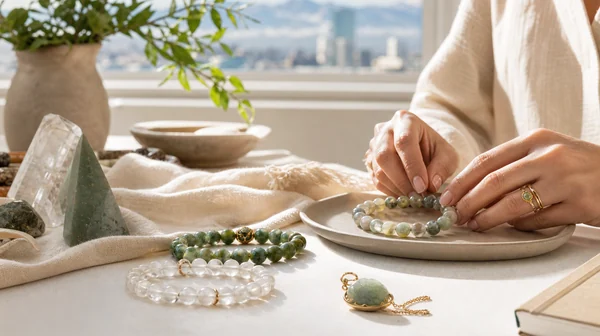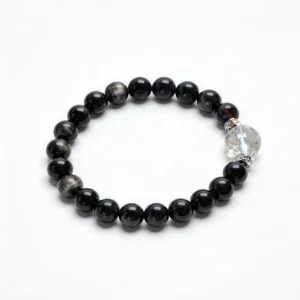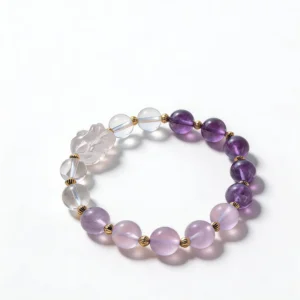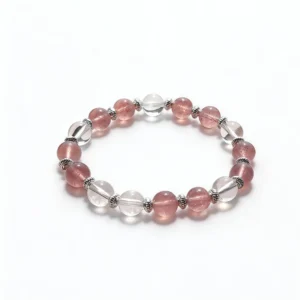

Identifying real jade jewelry requires more than judging color, weight, temperature, or sound. Begin with the seller’s material statement, then check treatment disclosure, photographs, workmanship, documentation, and return terms. Home observations can help you notice questions, but they cannot reliably prove whether an item is jadeite or nephrite, whether it has been treated, or whether a report belongs to the piece.
Start with the material name
Jade is a gem name used for jadeite and nephrite. The GIA jade description explains that distinction. A useful listing should identify the stated material rather than relying only on words such as genuine, natural, green jade, or Hetian. Read geographic or trade terms carefully and do not assume they independently establish origin, treatment status, age, rarity, or value.
Read treatment disclosure separately
Material identity and treatment are different questions. For jadeite, A, B, and C are trade terms associated with treatment disclosure, not grades of beauty. Type A generally refers to jadeite without chemical treatment apart from traditional surface waxing; Type B is acid bleached and polymer impregnated; Type C is dyed. The QZZEN guide to jade A, B, and C terminology explains why those labels should not be casually transferred to every nephrite or Hetian jade listing.
Use photographs for observation, not proof
Compare front, back, side, edge, drill-hole, clasp, and close-up views under more than one lighting condition. Look for consistent polish, coherent color distribution, finished openings, and construction that matches the description. Photographs may reveal obvious damage, dye concentration, surface coating, or mismatched components, but compression, white balance, and studio lighting limit what an image can prove. Ask whether the photos show the exact item or representative inventory.
Do not rely on common home tests
Scratch tests can damage jewelry and still produce ambiguous results. Temperature, tapping sound, hair, flame, flashlight, and density shortcuts are also unreliable when used without controlled methods and suitable reference material. Mounted stones and assembled jewelry make interpretation harder. If identity or treatment materially affects the purchase, use a qualified gemological laboratory rather than a social-media test.
Check any laboratory report
A report should identify the laboratory, item type, measurements, result, and report number. Confirm that the measurements, photographs, inscription, or other identifying details correspond to the jewelry offered. Determine whether the report states material identity, treatment findings, origin, or only part of that information. A seller’s authenticity card and an independent laboratory report are not equivalent documents.
Separate identity from quality and value
Even confirmed jade varies widely in color, transparency, texture, workmanship, size, condition, and market value. GIA’s jade quality overview discusses these factors separately. A genuine material result does not guarantee fine carving, durable stringing, fair pricing, desirable color, or a design that suits the wearer. Inspect polish, drill holes, carved high points, bails, clasps, elastic, and cords as part of the purchase decision.
Ask focused questions before checkout
- What exact jade material is stated for this item?
- What treatments, if any, are disclosed?
- Do the photographs show the exact piece?
- Is an independent laboratory report included, and what does it conclude?
- What are the item’s dimensions, weight, condition, and included components?
- What happens if the received item materially differs from the listing?
Use The Jade Collection to compare current descriptions and forms, while treating each product page as the source for that item’s claims. QZZEN’s Authenticity Promise outlines material and documentation questions buyers can bring to support. Review the current Returns policy before purchase rather than waiting until an issue arises.
Care without assuming treatment status
GIA’s jade care guidance identifies warm soapy water as a safe cleaning method and notes that heat can affect treated material. Avoid destructive testing and harsh chemicals. For assembled jewelry, use a soft cloth, protect carved edges from impact, store pieces separately, and inspect stringing or hardware periodically.
Bottom line
Real-jade identification is an evidence process, not a visual trick. Confirm the material wording, request plain treatment disclosure, examine workmanship, verify what a report actually covers, and keep transaction protections in view. When the answer matters financially, independent laboratory testing is more reliable than any home test.