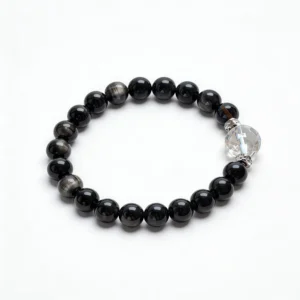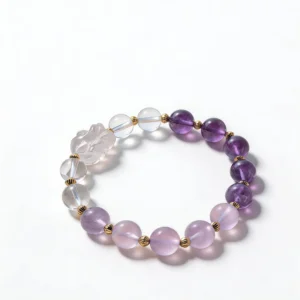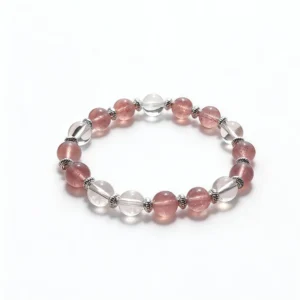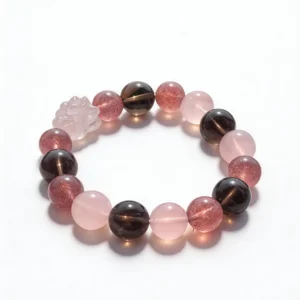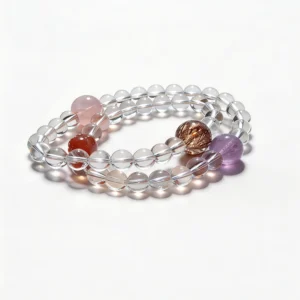

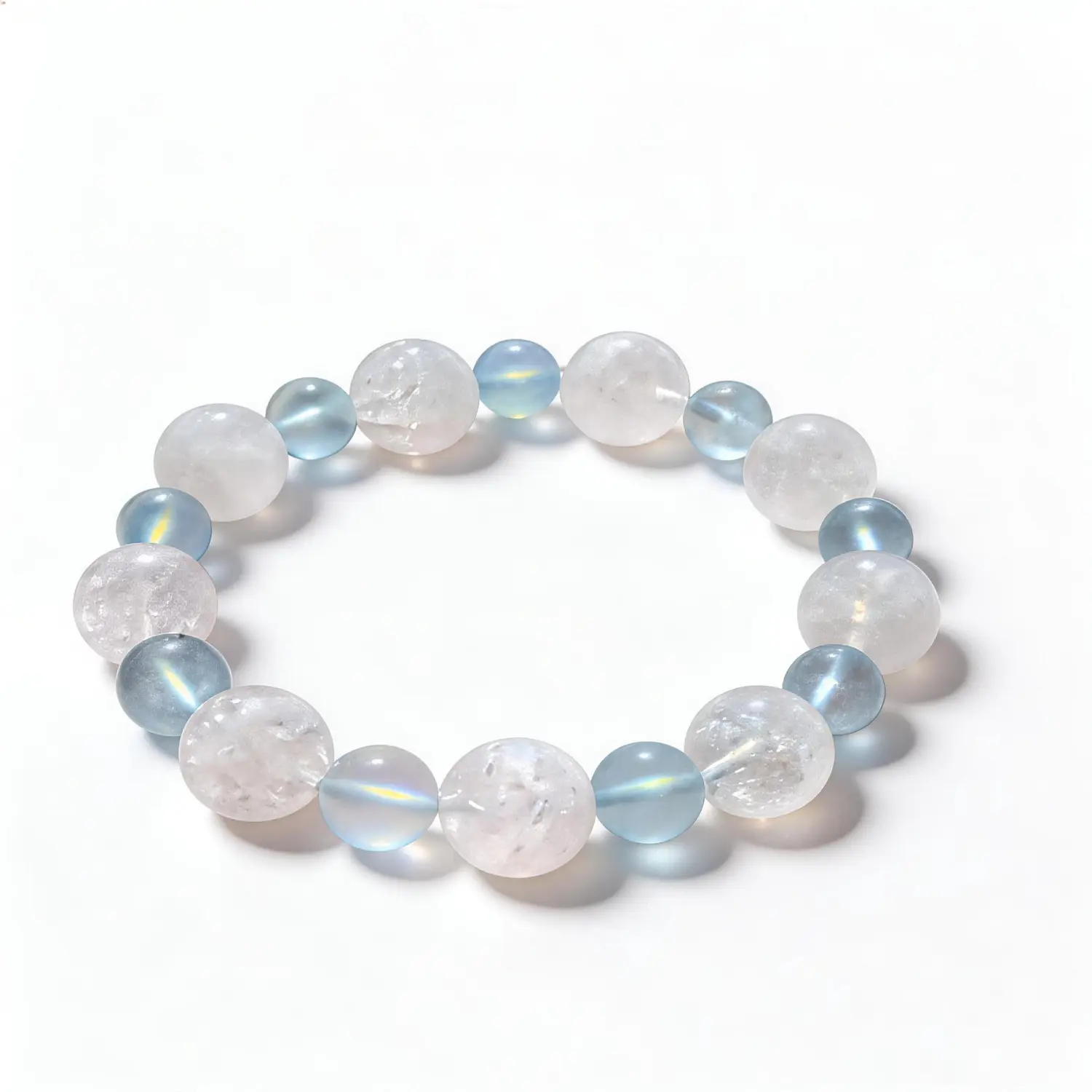
Buying notes should turn a product page into a repeatable inspection process. For a bracelet described as aquamarine, moonstone, and phantom quartz at 13mm, begin with wrist scale and construction, then review photographs, material wording, variation, care, and transaction terms. A stone name alone does not establish quality or identity.
Start with the 13mm scale
Thirteen-millimeter beads create a substantial profile. They take more space across the wrist, stand farther from the skin, and may meet a desk edge or sleeve cuff sooner than smaller beads. Compare the stated diameter with a ruler or a bracelet already owned before deciding that the visual impact will also be comfortable.
Measure the intended wrist
Use Size Help to establish a starting measurement. Then check the exact listing option and decide whether the wearer prefers a close, standard, or loose fit. Bead diameter and wrist circumference are separate measurements; neither should be guessed from a lifestyle photograph.
Read the product statement literally
The current 13mm aquamarine bracelet listing is the source for the product’s stated materials, dimensions, images, price, availability, and included components. Do not expand those statements into an unsupported claim about mine origin, treatment status, rarity, grade, or certification.
Review each stone name separately
A multi-stone title combines several material claims; it does not make them interchangeable. GIA’s aquamarine overview describes aquamarine as the blue-to-green-blue variety of beryl. Use an authoritative reference to understand a gem category, while relying on the individual listing and supplied documentation for claims about the item being sold.
Inspect photographs in a fixed order
- Use the full-bracelet view to judge the color sequence and overall symmetry.
- Use close-ups to inspect polish, drill holes, surface-reaching features, and spacing.
- Look for side views that show bead depth and the bracelet’s profile.
- Compare images for consistent hardware, spacers, cord, or elastic.
- Confirm whether photographs show the exact piece or representative inventory.
Natural-looking variation in an image is not proof of identity, and a uniform image is not proof of treatment. Record questions rather than filling gaps with assumptions.
Check drill holes and stringing
Look for chips, rough rims, excessive thinning, or cord abrasion where the stringing passes through each bead. Spacers should sit evenly without pinching adjacent surfaces. If the listing does not show the closure, knot, or elastic, ask what construction is included before purchase.
Judge color variation realistically
Screen brightness, white balance, background color, and image compression can change how pale blue, gray, white, or translucent areas appear. Read any variation notice and compare several product images. Request clarification when the exact-item policy is unclear.
Separate appearance from promises
Choose the bracelet for visible design, fit, craftsmanship, and personal meaning. Descriptions of calm, clarity, protection, or energy are cultural or personal language, not evidence that jewelry will produce a medical, emotional, financial, or spiritual outcome.
Ask material questions through the stated route
QZZEN’s Authenticity Promise explains how to raise questions about material descriptions and available documentation. Ask specifically what is known for this item. Do not assume every bracelet carries a laboratory report or that a general policy proves a particular origin or treatment status.
Plan conservative care
GIA’s aquamarine care guidance identifies warm soapy water as a generally safe cleaning method and warns that heat can be risky for treated material. For a mixed-material bracelet, use the most conservative applicable method, avoid harsh chemicals and ultrasonic cleaning unless suitability is confirmed, and dry the stringing before storage.
Inspect promptly after delivery
Check the bracelet in indirect daylight, compare it with the listing, and inspect bead surfaces, stringing, fit, and included materials before regular wear. Review the current Returns policy so any question is raised within the applicable conditions.
Bottom line
The useful buying question is whether this 13mm bracelet’s scale, fit, photographs, disclosed materials, workmanship, and care requirements suit the wearer. Verify those points independently and leave undocumented conclusions unresolved.