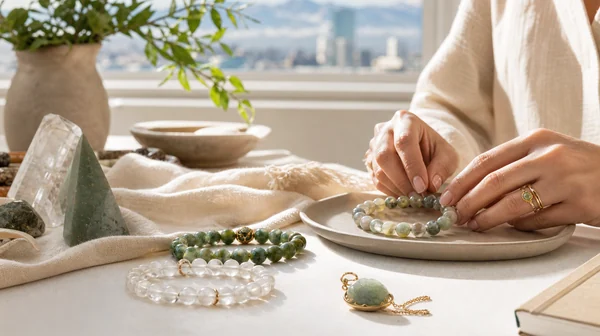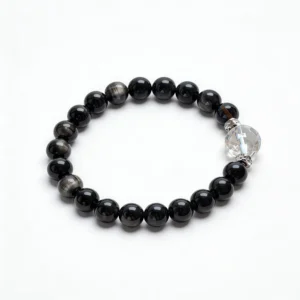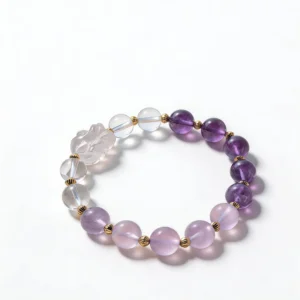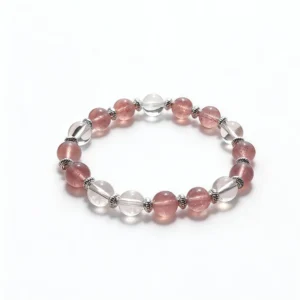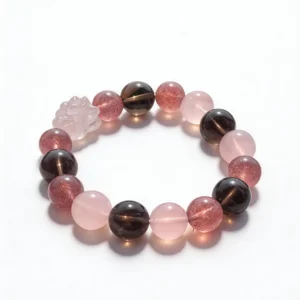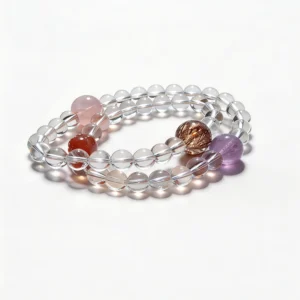

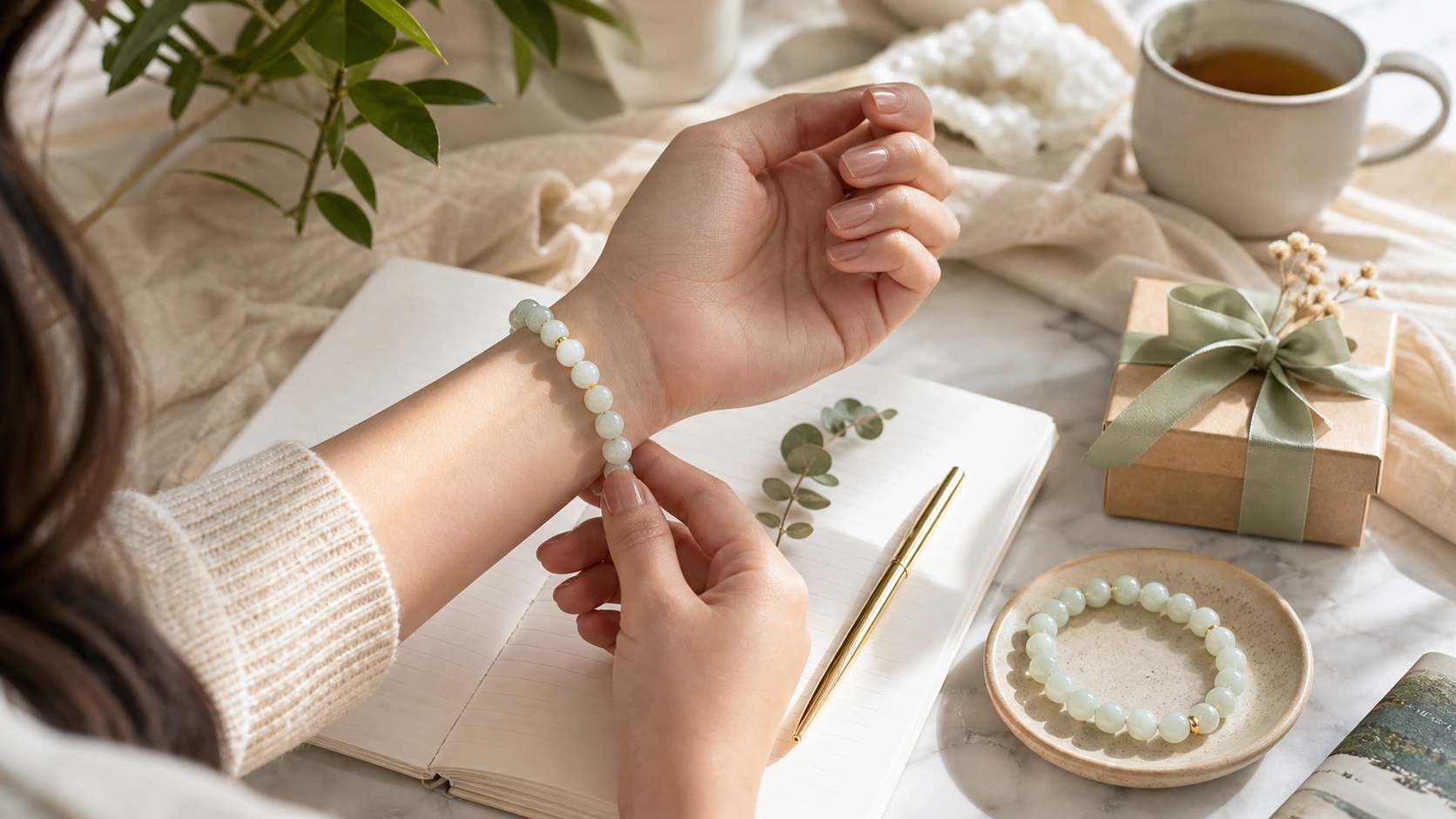
A crystal bracelet is worth buying when its design will be worn repeatedly, the fit and construction suit the wearer, the material description is adequately supported, and the total cost fits the budget. “Worth it” is a use decision, not proof that a stone will change health, luck, relationships, protection, or income.
Define worth through use, evidence, and total cost
Start with three questions: How often will it be worn? What item information can be verified? What will ownership cost beyond the listed price? Include shipping, tax, possible resizing, maintenance, and replacement of elastic or cord. A lower price is not a bargain if the format stays in a drawer.
Choose the bracelet format for the routine
Stretch bracelets are quick to put on but rely on elastic condition. Cord designs may be adjustable but can retain moisture or fray. Clasped bracelets offer controlled sizing but require dexterity and sound hardware. Consider typing, handwashing, uniforms, watches, sleeves, and workplace rules.
Calculate likely wear before comparing prices
Estimate realistic wears during the first year. A simple bracelet worn weekly may offer more practical value than a dramatic design reserved for one uncertain event. This is not an investment calculation; resale and appreciation should not be assumed.
Check fit before customization
Measure the wrist where the bracelet will sit and use QZZEN’s Size Help. Bead diameter changes interior space and wrist contact. If standard sizing is unsuitable, the Create builder can help plan a deliberate bead sequence and size.
Separate reference information from item evidence
GIA’s gem encyclopedia explains recognized gem materials and their characteristics. It does not authenticate an individual bracelet from a photograph. Compare the listing, seller disclosures, exact-piece or representative images, and available documentation. QZZEN’s Authenticity Promise provides a route for item-specific questions.
Value construction you can observe
Look for clean drill holes, finished surfaces, suitable tension, closed jump rings, smooth contact points, and a secure clasp or knot. Natural variation is compatible with quality; sharp rims, deep breaks, exposed wire, and visibly strained stringing are practical concerns.
Accept the care commitment
GIA’s jade care and cleaning guide provides one material-specific example of why treatment and composition matter. Mixed-material bracelets must be handled according to the least tolerant component. Factor separate storage and periodic inspection into the purchase decision.
Keep personal meaning bounded
A color, stone, or pattern can mark a memory or chosen intention. That personal role may increase repeat wear, but it should not be sold as a guaranteed medical, psychological, financial, or protective effect.
Preserve flexibility on arrival
Inspect size, assembly, finish, and components before regular wear. Keep packaging and follow the returns policy before restringing or altering the piece.
Bottom line
A crystal bracelet is worth buying when it earns a realistic place in the wardrobe, fits comfortably, is competently built, carries understandable evidence, and can be maintained without disproportionate cost.