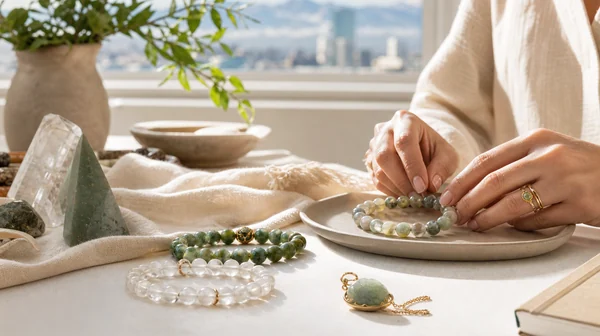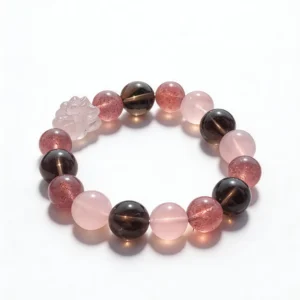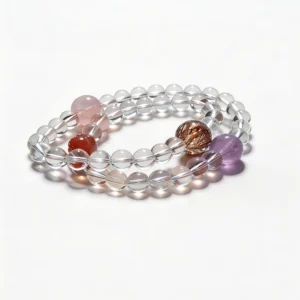

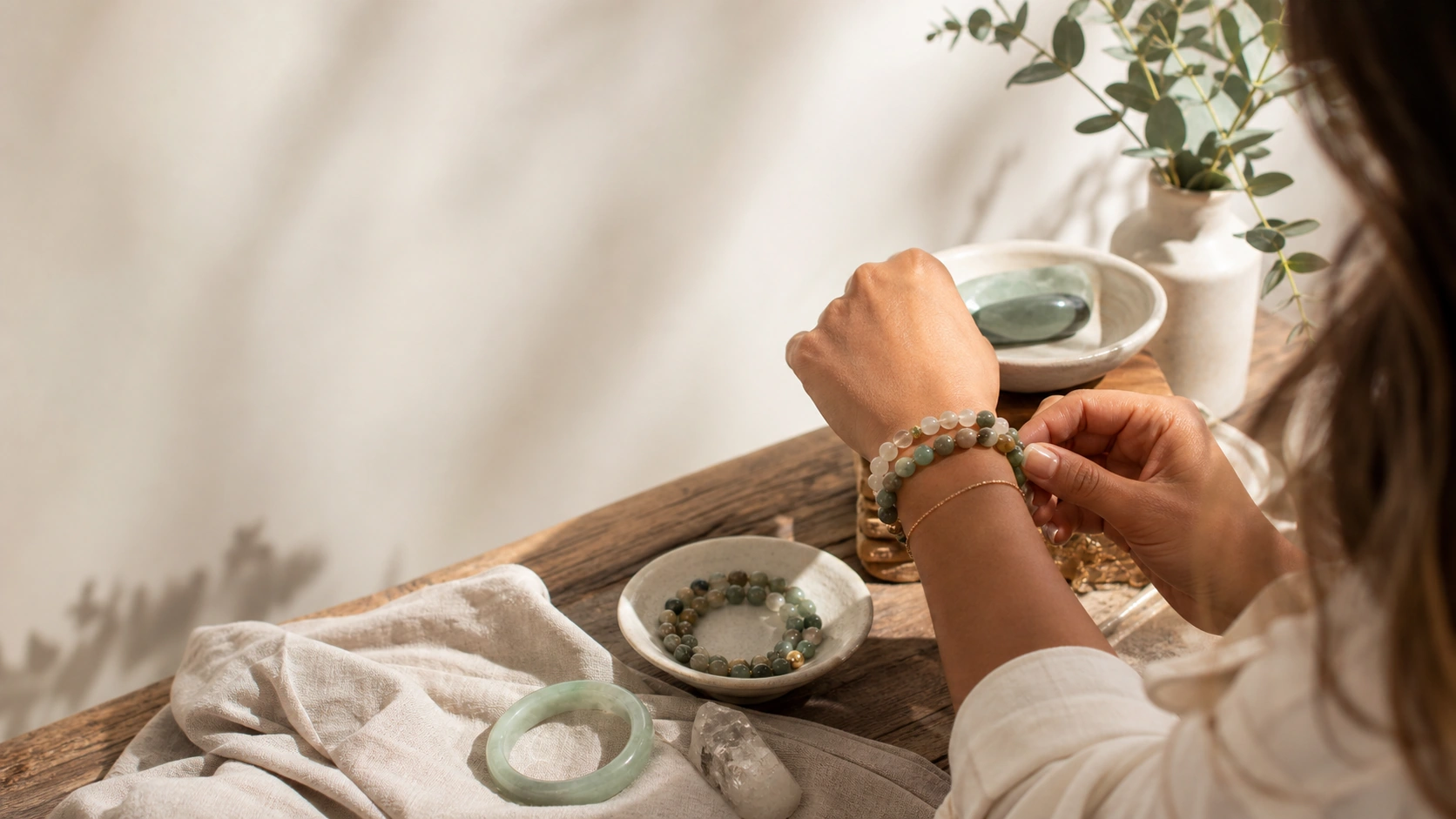
Most jewelry brands say something about meaning. QZZEN makes a specific claim: every stone carries a feeling . That’s worth unpacking before you buy, because it shapes how the pieces are selected, how they’re presented, and what you’re actually getting when you order a crystal bracelet or jade piece from a Denver-based independent store.
This is a practical look at what that positioning means for shoppers the materials involved, how to size and read a piece before checkout, care realities, and what to verify when you’re deciding between a generic mass-market bracelet and something from a smaller, stone-focused brand.
Every Stone Carries Materials And Details
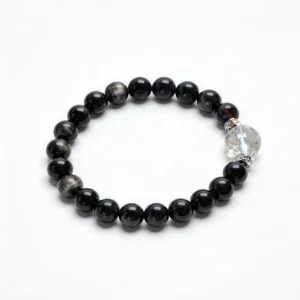
QZZEN positions itself as a Denver gemstone lifestyle brand. The product range centers on crystal bracelets, jade pieces, and gift-ready stones categories where material identity really does drive the purchase. The Silver Sheen Obsidian Clear Quartz Rune Bracelet is a good example of how the store thinks about combinations: two stones with distinct visual characters paired on one piece. Silver sheen obsidian has a metallic, almost reflective surface layer caused by microscopic inclusions of feldspar. Clear quartz is optically transparent, catching light differently. On the same bracelet, the contrast is visible and intentional.
That material pairing logic is central to QZZEN’s offer. You’re not choosing a generic black bead bracelet. You’re choosing a specific volcanic glass with a particular finish alongside a specific quartz variety. Whether that matters to you depends on how much you care about the actual stone versus the look but knowing the difference helps you shop more confidently across the site’s range of crystal and jade pieces.
Buying Notes Before Checkout
Crystal and jade bracelets don’t size like clothing. Most are sold by bead diameter and bracelet inner circumference, which means you need two numbers: your wrist measurement and a preference for how snug or loose you want the fit. A 16mm bead bracelet will sit differently than an 8mm one at the same circumference simply because fewer, larger beads leave less flexibility in the strand.
Before ordering from QZZEN, check the product page for listed bead size and strand length. If those details aren’t visible, that’s the specific thing to ask about or verify before checkout. General guidance: measure your wrist with a soft tape or a strip of paper, then add 0.5 to 1 inch for a comfortable bracelet fit. Add closer to 1.5 inches if you prefer a looser, stackable style.
Rune-carved beads may have slightly different surface texture than smooth rounds, so if tactile comfort matters to you, that’s worth confirming through photos or by contacting the store directly.
With natural stone jewelry , a few observable details separate a well-made piece from a rushed one. When you’re looking at QZZEN product photos or any crystal bracelet listing, check for these signals:
- Bead consistency: Natural stones vary slightly in color and pattern. That’s expected and normal. What you’re looking for is consistent bead size across the strand irregular sizing often indicates lower-grade sorting.
- Carving depth on rune beads: Shallow, faint engravings wear down faster. In product photos, look for clean, defined lines with visible depth.
- Cord or elastic quality: Most bead bracelets use elastic. A bracelet photographed flat with no visible strand sag is usually a better sign than one that photographs with visible stretch even when unloaded.
- Surface finish: Silver sheen obsidian should show a visible sheen or chatoyance effect a reflective glint within the stone rather than just on the surface. If the photo shows a flat black bead with no internal movement, confirm material identity before purchasing.
QZZEN’s store positioning around meaningful gemstone selection suggests these details matter to how they source and photograph pieces. Still, natural stone photos can shift under different lighting, so if color accuracy is critical to your purchase, that’s always worth a direct question.
Obsidian is volcanic glass harder than most people expect (around 5 5.5 on the Mohs scale) but brittle. It chips rather than scratches, which means impact is more of a risk than daily friction. A bracelet worn during workouts, yard work, or activities with hard surface contact will eventually show edge chips on the beads. Clear quartz is harder (7 on Mohs) and more durable for daily wear, but still benefits from the same basic care habits.
For a rune-carved obsidian and quartz bracelet, the practical care routine is straightforward: keep it off your wrist during high-impact activities, avoid extended water exposure (which degrades elastic over time), and wipe beads clean with a soft dry cloth. If the bracelet uses elastic stringing, expect to have it re-strung after a year or two of regular wear that’s normal for the format, not a quality defect. Storing it flat rather than hanging helps the elastic retain shape longer.
How do I measure my wrist for a QZZEN bracelet? Use a soft measuring tape or wrap a strip of paper around your wrist just below the wrist bone. Note that measurement in inches, then add 0.5 to 1 inch for a standard fit. Check the product page for the listed bracelet circumference and bead diameter before ordering.
Is silver sheen obsidian the same as regular black obsidian? No. Silver sheen obsidian contains microscopic feldspar inclusions that create a reflective, metallic sheen visible at certain angles. Regular black obsidian is uniformly opaque. The sheen is a natural feature of the specific material not a coating or treatment.
How can I tell if the obsidian beads are natural and not dyed glass? Natural obsidian is cooler to the touch than room-temperature glass and has a slightly waxy luster rather than a bright glass shine. In photos, look for the subtle internal sheen effect. If you’re uncertain, ask QZZEN directly reputable independent stores can confirm material sourcing.
What’s the expected lifespan of the elastic on a bead bracelet? With regular daily wear and proper care (no prolonged water exposure, no high-impact use), quality elastic should hold for 12 to 24 months before showing stretch fatigue. Re-stringing is a standard maintenance step, not a sign of poor quality. The beads themselves last indefinitely with normal wear.
Can this bracelet be worn in the shower or while swimming? It’s best to avoid it. Water doesn’t harm the stones, but repeated soaking weakens elastic and can loosen any adhesive used on end caps. For longevity, remove the bracelet before showering, swimming, or washing dishes.
If the material pairing and store approach make sense for what you’re looking for, the next useful move is to look at the full range on site particularly if you’re comparing bead sizes or deciding between a rune piece and a smooth-bead style. QZZEN’s crystal bracelet and jade collections let you see how different stones photograph together and how the brand handles finish and scale across price points.
Browse the current crystal bracelet and jade selection at qzzen.com to compare materials side by side. If you’re unsure about sizing or stone identity on a specific piece, contact the store before ordering that’s the most reliable way to buy confidently from an independent jewelry brand.
Worth a quick look: view QZZEN | Every stone carries a feeling and compare it with a few related pieces from Qzzen . You will usually know quickly which one feels easiest to wear, gift, or use.
The best starting point is the shopper’s original question: does QZZEN | Every stone carries a feeling solve a real need, or is it only interesting in the first photo? A useful buying guide should answer that by connecting the headline to visible product details, likely use cases, and the way the item fits the store’s broader assortment.
That keeps the article grounded. Instead of repeating generic shopping advice, it gives the reader a clear reason to keep reading and a practical way to judge whether the product belongs in their cart.
This is especially important for independent stores, where trust often comes from clarity. A reader should feel that the store is helping them understand the product rather than asking them to guess.
Product photos are evidence, not decoration. Close-ups help shoppers read texture, finish, and color; lifestyle images help them understand scale, use, and how the item might fit into a real routine.
When the photos and product description tell the same story, the article can reduce hesitation naturally. The reader sees what to compare and why the product is worth another look.
Q: Is QZZEN | Every stone carries a feeling worth buying?
A: It depends on what you want it to do. Check the material quality, sizing, finish, and product details first, then compare those signals with the price.
Q: How do I know if the quality is good?
A: Look for clear material notes, close-up photos, consistent color or finish, and practical care information. If a listing is vague on those points, treat that as something to verify before checkout.
Q: What is the typical price range?
A: Price can vary widely by material grade, finish, size, construction, and rarity. Use the quality signals above to judge whether the price matches what the product page actually shows.
Q: How do I care for it?
A: Keep it away from harsh chemicals, avoid long periods of direct sunlight when color sensitivity matters, and store it separately so the surface is less likely to scratch.
Q: Where can I find more information?
A: Qzzen publishes buying notes and product guidance, so browse the blog and related product pages for material-specific details before deciding.
Why This Product Deserves A Closer Look
The best starting point is the shopper’s original question: does QZZEN | Every stone carries a feeling solve a real need, or is it only interesting in the first photo? A useful buying guide should answer that by connecting the headline to visible product details, likely use cases, and the way the item fits the store’s broader assortment.
That keeps the article grounded. Instead of repeating generic shopping advice, it gives the reader a clear reason to keep reading and a practical way to judge whether the product belongs in their cart.
What The Product Details Tell You
Details such as material, color, finish, size, care, compatibility, and visible construction are where QZZEN | Every stone carries a feeling becomes easier to evaluate. If the product page gives those details, they should lead the section; if it does not, the article should tell shoppers what to verify before buying.
This is especially important for independent stores, where trust often comes from clarity. A reader should feel that the store is helping them understand the product rather than asking them to guess.
How The Photos Support The Decision
Product photos are evidence, not decoration. Close-ups help shoppers read texture, finish, and color; lifestyle images help them understand scale, use, and how the item might fit into a real routine.
When the photos and product description tell the same story, the article can reduce hesitation naturally. The reader sees what to compare and why the product is worth another look.
Frequently Asked Questions
Q: Is QZZEN | Every stone carries a feeling worth buying?
A: It depends on what you want it to do. Check the material quality, sizing, finish, and product details first, then compare those signals with the price.
Q: How do I know if the quality is good?
A: Look for clear material notes, close-up photos, consistent color or finish, and practical care information. If a listing is vague on those points, treat that as something to verify before checkout.
Q: What is the typical price range?
A: Price can vary widely by material grade, finish, size, construction, and rarity. Use the quality signals above to judge whether the price matches what the product page actually shows.
Q: How do I care for it?
A: Keep it away from harsh chemicals, avoid long periods of direct sunlight when color sensitivity matters, and store it separately so the surface is less likely to scratch.
Q: Where can I find more information?
A: Qzzen publishes buying notes and product guidance, so browse the blog and related product pages for material-specific details before deciding.