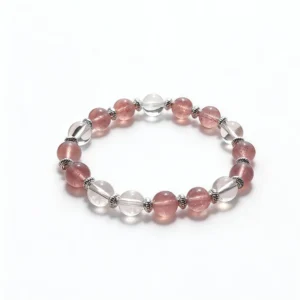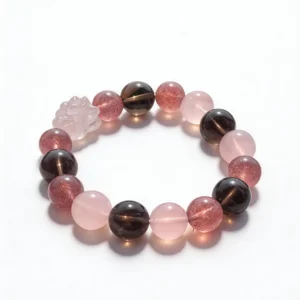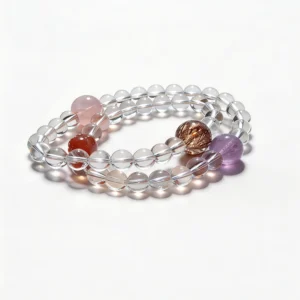


A travel-friendly bracelet should be easy to inspect, comfortable to wear, and simple to store. Product photos can make stone, glass, resin, and dyed material look similar, so the useful questions are practical ones: What material name does the listing use? Are bead dimensions stated? Do close-up photos show variation? Is the strand construction described? This guide explains how to compare those details before adding a bracelet to a packing list.
Confirm the Listing Facts Before a Trip
Begin with the written product information rather than the mood of the photographs. A useful listing identifies the material, bead diameter, bracelet construction, and available size information. It should also provide several photographs that can be compared with the description. If a page uses broad material wording without measurements or close views, note the missing information and ask the seller before ordering.
Use the same review method across several listings. The QZZEN shop provides a starting point for comparing product names, dimensions, photographs, and construction details. Keeping the comparison criteria consistent makes differences between listings easier to see.
Inspect Color and Natural Variation
Color variation can be useful evidence, but it is not proof of identity by itself. Quartz beads may show clouds, veils, bands, or changes in transparency. Obsidian can appear very dark in one photograph and reveal sheen when the viewing angle changes. Other materials may look more uniform. Lighting, camera exposure, image processing, dye, and surface finish can all change how a bracelet appears online.
Compare photographs taken from more than one angle and look for details that remain consistent. Check whether the written color description matches the images. Repeated marks in exactly the same position across multiple beads may also deserve a closer look. No single visual clue confirms a material, so use color together with dimensions, finish, seller documentation, and the physical inspection after delivery.
Use Bead Scale to Plan Comfortable Wear
Bead diameter changes both appearance and how a bracelet sits beside sleeves, a watch, or another strand. An 8 mm bead generally creates a lower profile than a 10 mm or 12 mm bead, but the full fit also depends on wrist size, bead count, spacers, charms, and the type of closure. A close photograph without a ruler can make several sizes appear almost identical.
Check the listed diameter and use a ruler to view that measurement at actual scale. Then review the bracelet size guide before ordering. A measured comparison is more useful than relying on labels such as small, standard, or oversized. For a gift, use an existing bracelet that fits the recipient as a reference when possible.
Review Strand, Clasp, and Charm Construction
Travel adds repeated handling: a bracelet may be removed, placed in a tray, packed in a pouch, or moved between bags. Inspect photographs for smooth drill holes, consistent spacing, secure knots, and hardware that sits straight. For stretch designs, look for a clear description of the cord and examine how the knot area is finished. For clasp designs, check the clasp type and whether connecting rings appear fully closed.
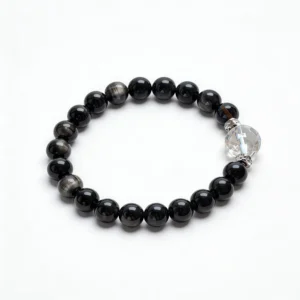
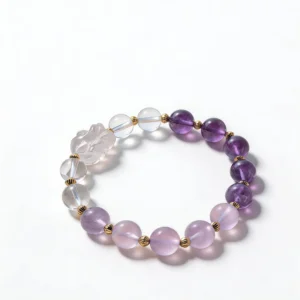
Charms and large spacers can change how a bracelet rests against the wrist. Confirm their dimensions and attachment points, especially if the bracelet will be worn near knit cuffs or carried beside electronics. The Silver Sheen Obsidian Clear Quartz Rune Bracelet and the Amethyst Clear Quartz Bracelet offer two concrete examples for comparing darker and lighter materials, bead scale, and decorative elements.
Pack Stone Jewelry With Separation
Place a bracelet in a soft pouch or a divided jewelry case rather than dropping it loose into a bag. Separation reduces contact with keys, metal hardware, and harder jewelry surfaces. Keep the piece away from liquids that could affect elastic, plating, adhesives, or porous materials. If airport or venue staff ask for jewelry to be removed, place it directly into its pouch instead of leaving it loose in a tray.
Do not assume that every material should be cleaned in the same way. A soft dry cloth is a conservative first step for routine surface dust. Product-specific care instructions should guide any additional cleaning, particularly when a bracelet combines stone, metal, cord, coatings, or adhesive-set parts.
Check the Bracelet Again After Arrival
When the bracelet arrives, compare it with the listing before removing packaging or tags that may be needed for a return. Confirm the bead diameter, overall fit, color range, charm placement, and closure style. Turn the piece under ordinary room light and indirect daylight to see whether the visible details agree with the product photographs.
Also inspect the strand under gentle tension without overstretching it. Look for cracked beads, sharp edges, loose findings, exposed cord, or a clasp that does not close correctly. Photograph any discrepancy promptly and use the seller’s current support process. This arrival record is more useful than trying to remember how the listing looked later.
Use a Pre-Trip Bracelet Checklist
- Record the material name and bead diameter shown on the product page.
- Compare several close-up photographs under different viewing angles.
- Measure the wrist or compare against a bracelet with a known fit.
- Inspect cord, knots, clasps, connecting rings, spacers, and charms.
- Read the current care, shipping, and return pages before ordering.
- Prepare a soft pouch or divided case for transport.
- Photograph the bracelet and packaging when it arrives.
Compare Two Listings With the Same Method
Put two candidate listings side by side and record the same fields for each: material wording, bead diameter, wrist-size information, construction, number of useful photographs, care instructions, and seller contact path. A listing with specific, internally consistent details is easier to evaluate than one built mainly around broad promises. If an important field is missing, ask for clarification before purchase.
This method also keeps styling choices separate from material evidence. You can prefer a particular color, charm, or bead scale while still checking the factual information with the same standard. For a wider comparison, browse the crystal bracelet collection and note which combination best suits the intended wrist fit, clothing, and packing method.
Create With QZZEN
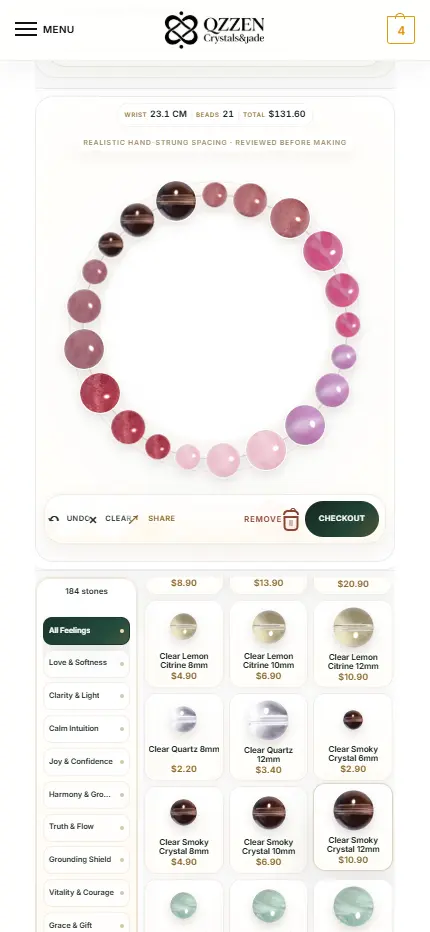
Preview a Travel-Friendly Bracelet Layout
Use QZZEN Create to compare bead size, stone combinations, and a complete circular layout before ordering. Review the arrangement beside your wrist measurement and the other jewelry you plan to pack.