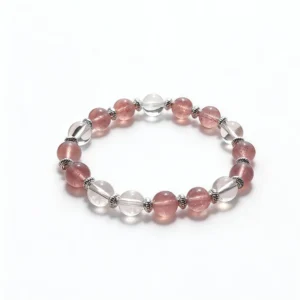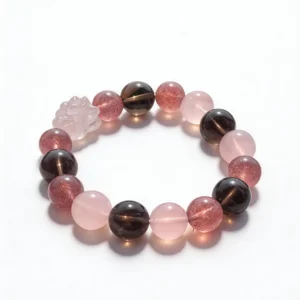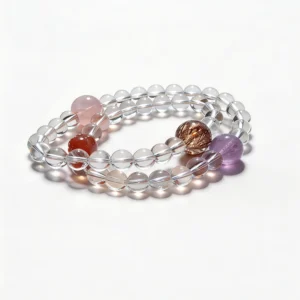


Crystals occur in nearly every visible color, including colorless, white, black, gray, pink, red, orange, yellow, green, blue, purple, brown, and combinations of these hues. The useful question is not simply how many colors exist, but what produces a color, how it changes under different light, and whether a seller discloses treatments accurately.
Why Crystals Appear in So Many Colors
A mineral’s chemical composition and crystal structure affect which wavelengths of visible light are absorbed or transmitted. Small amounts of other elements can also change its appearance. Chromium, iron, manganese, copper, and titanium are among the elements associated with color in various minerals, although the result depends on the host mineral and its structure.
Structural defects, inclusions, and interactions between elements can produce additional effects. That is why two specimens in the same mineral family may look noticeably different without either one being incorrectly named.
A Practical Crystal Color Range
There is no fixed total because color can vary continuously from pale to saturated, and many stones show zoning, bands, spots, flashes, or several hues at once. The following groups provide a useful visual starting point.
- Colorless to white: rock crystal quartz, calcite, selenite, and milky quartz can appear transparent, translucent, or opaque.
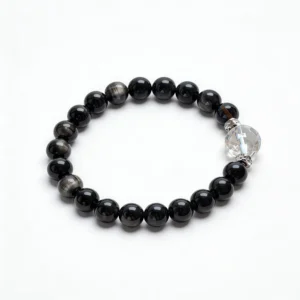
- Gray to black: smoky quartz, obsidian, hematite, and some tourmaline range from silvery gray to nearly opaque black.
- Pink to red: rose quartz, rhodonite, garnet, and ruby cover soft pink, raspberry, brick red, and deep red.
- Orange to yellow: citrine, amber, carnelian, and some calcite show lemon, honey, amber, peach, or orange tones.
- Green: aventurine, jade, malachite, peridot, and moss agate include mint, olive, forest, and blue-green shades.
- Blue: aquamarine, sodalite, turquoise, lapis lazuli, and blue lace agate range from pale blue to navy.
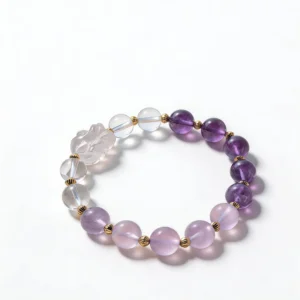
- Purple: amethyst, fluorite, and charoite may appear lilac, violet, grape, or purple with visible patterning.
- Brown and multicolor: tiger’s eye, jasper, agate, labradorite, and included quartz often combine bands, patches, or optical flashes.
These examples describe common appearances, not a complete identification key. Several unrelated materials can share a similar hue, while one mineral name may cover a broad color range.
Color Is Not Enough to Identify a Stone
Use color as one observation rather than a conclusion. Transparency, luster, banding, grain, inclusions, hardness, weight, and crystal form may provide additional clues. A photograph alone rarely establishes every identifying property.
Trade names can make comparison harder. A descriptive name may refer to a color, pattern, source, or sales category rather than a separate mineral species. Ask for the mineral or material name behind unfamiliar wording.
How Lighting Changes What You See
Daylight, warm indoor bulbs, cool LEDs, screen settings, and camera processing can shift the apparent hue. Reflections from nearby objects may also add color to polished surfaces. Some materials display different colors from different directions or under different light sources.
- View the stone in indirect daylight and neutral indoor light.
- Compare it against a white or neutral background.
- Look at the surface, edges, holes, and any transparent areas.
- Rotate the item to check zoning, flash, banding, and reflections.
- Compare photographs only after accounting for lighting and editing.
Natural Variation, Treatment, and Imitation
Natural variation can include uneven color, internal veils, mineral inclusions, and bands. None of those features alone proves authenticity. Glass, resin, composite material, and laboratory-grown material can also contain bubbles, patterns, or deliberate variation.
Heat, irradiation, dye, coating, impregnation, and stabilization may alter color or durability. These processes are not all equivalent, and their presence does not automatically determine quality. What matters for an informed comparison is accurate naming and clear disclosure of known processing.
Compare Crystal Colors Before Buying
Consistent photographs and specific product details are more useful than symbolic color promises. Before purchasing loose stones, decor, or jewelry, check the following:
- The stated mineral or material name
- Whether images show the exact item or a representative example
- Dimensions, bead diameter, and approximate opacity
- Known treatments, coatings, dyes, or composite construction
- Expected variation between pieces
- Care guidance for the material and its setting or stringing
A higher price, saturated hue, or uniform surface does not by itself prove rarity, origin, or lack of treatment. Documentation should be connected to the specific item and evaluated by what it actually verifies.
Choose Colors for Jewelry and Displays
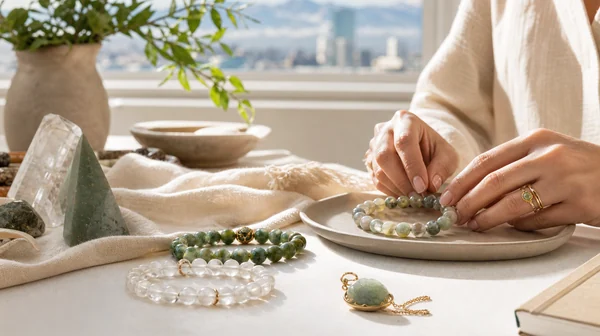
For jewelry, compare the stone color with bead size, metal tone, cord color, and the clothing it will be worn with. Translucent beads can look different against skin or fabric, while opaque beads usually keep a more consistent appearance across backgrounds.
For a display, test the object where it will be placed. Direct sun may change how a translucent specimen looks and can fade some materials over time. Use a stable stand, keep heavy pieces away from edges, and follow material-specific cleaning guidance.
Build a Color-Based Bracelet
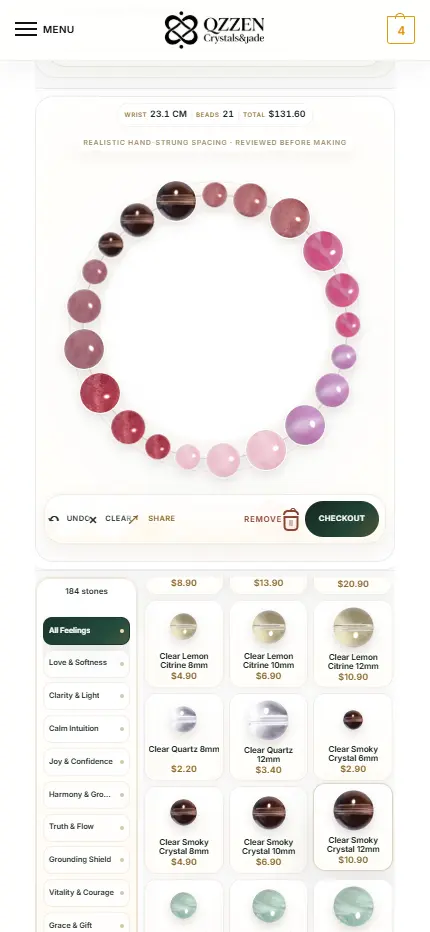
Browse the QZZEN crystal bracelet collection, check the bracelet size guide, or use QZZEN Create to compare bead colors, scale, and spacing in a circular layout before checkout.
Create With QZZEN
Compare Crystal Colors in One Bracelet
Test bead hues, sizes, and spacing in a finished circular layout before you order.